Mike’s Quick Answer
Being partly at fault does not automatically prevent a New Jersey personal injury recovery. Under the general comparative-negligence rule, an injured person may recover when their negligence is not greater than that of the person, or the combined persons, against whom recovery is sought. The damages are reduced by the injured person’s assigned share of fault.
I examine the evidence behind an insurer’s fault assessment and advocate for a fair account of your role in the incident. A percentage stated by an adjuster is a claim position, not a court’s final determination. The investigation should establish what each participant did and how that conduct contributed to the injury.
What Being Partly at Fault Means Under New Jersey Law
Negligence concerns the failure to use reasonable care under the circumstances. Comparative negligence allows the factfinder to compare the negligent conduct that caused the event. This can be relevant in a vehicle collision or a premises-liability matter, though particular claims may have additional rules.
For a simple illustration, suppose full damages are found to be $100,000 and the injured person is assigned 20 percent of the fault. The general percentage reduction would leave $80,000 before considering other applicable issues. That example explains the arithmetic; it is not an estimate of any particular case.
Eligibility to recover and allocation among defendants are related but distinct questions. N.J.S.A. 2A:15-5.1 addresses the comparison with the person or combined persons against whom recovery is sought. Other sections address findings and payment responsibility. I would explain the rules that actually apply to the parties in your case.
Examining an Insurer’s Claim That You Were Partly at Fault
An early fault assessment may be based on only a police report and brief statements. Later video or witness information can change the picture. I would ask which facts support the proposed percentage and identify what remains missing.
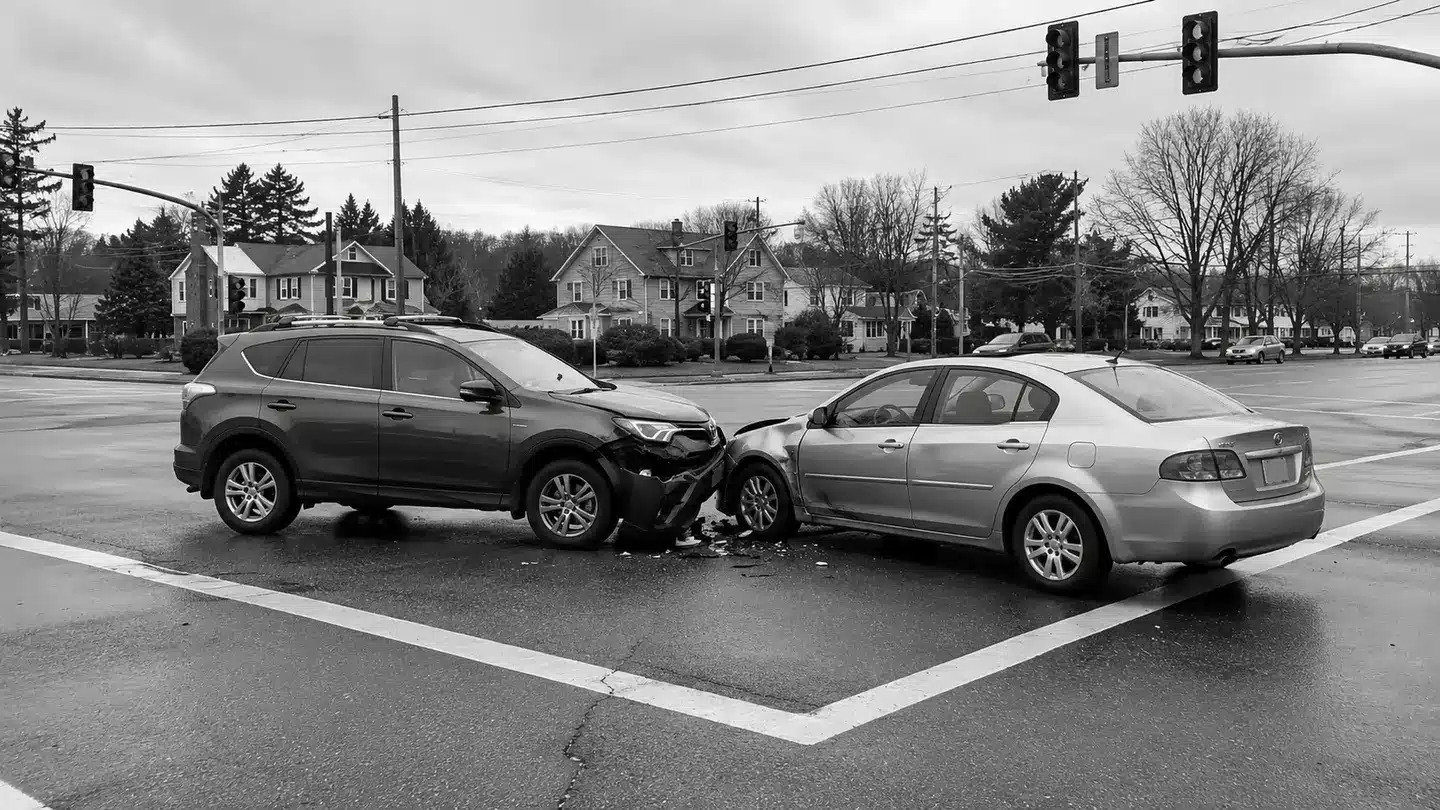
For example, a driver may be blamed for striking another vehicle without accounting for an abrupt lane change immediately beforehand. The impact location is relevant, but so is the sequence that placed the vehicles there. A recording can help establish whether the initial explanation considered that sequence fairly.
The response should be grounded in evidence. Disagreeing with an adjuster is not enough by itself. My job is to develop the facts and explain why they support a different assessment where that is justified. That gives the client a reasoned basis for deciding how to proceed.
Understanding Statements Made at the Scene
People sometimes apologize because they are upset or concerned about someone else. A statement can be evidence, but its meaning should be considered in context. I would ask what was said and why rather than assume a single sentence resolves the claim.
Be accurate when recounting the conversation. Do not change an account to fit a preferred outcome. If you initially misunderstood the movement of another vehicle, explain what you knew then and what you learned later. Independent evidence may help resolve the discrepancy.
The same care applies to witness statements. A witness who saw the approach may offer something different from a person who heard the impact. Understanding that viewpoint makes the evidence more useful and helps identify which questions remain open.
Preserving the Evidence That Explains Responsibility
Video and physical conditions can change quickly after an incident. A vehicle may be repaired, or a property hazard may be corrected. Early preservation can protect information needed to assess fault fairly.
If it is safe, original photographs can establish the scene and the direction of travel. They may also show what affected visibility. Do not put yourself in danger to collect them. Police records, nearby cameras and witness accounts may provide other sources when your own photographs are unavailable.
Vehicle or digital records can sometimes add timing information. Their usefulness depends on the system and the event. I would use them to answer specific questions and consider their limitations, rather than suggest that every collision can be reconstructed perfectly from a device.
Developing the Injury Evidence Separately
Fault addresses responsibility for the occurrence. The injury claim also needs evidence of the harm caused and its consequences. Both deserve attention. A well-supported account of the accident should be accompanied by an accurate medical and practical history.
I would discuss what has changed in your daily life and review the records supporting those changes. Work limitations may require employment information. Future medical needs require qualified medical support. The recommendation should reflect the evidence available for each part of the claim.
Settlement discussions often consider both damages and the likelihood of a particular fault allocation. I would explain that reasoning rather than present a number without context. The client should understand the basis for the recommendation and the issues that remain disputed.
Questions About Being Partly at Fault
Can a person recover at exactly 50 percent fault?
Potentially, yes. The statute uses a not-greater-than comparison, so equality is different from exceeding the applicable combined negligence. The parties and allocation still need review under the full statutory framework.
Who makes the final fault decision?
If the case is tried, the judge or jury acting as factfinder makes the relevant findings. Before trial, the parties evaluate the evidence and may agree to a settlement. An insurer’s demand or offer is not itself a verdict.
Should I call if I think I made a mistake?
Yes. Explain what happened honestly. A review can determine how that conduct fits with the other evidence and whether a claim is available. You do not need to decide the legal percentage yourself before seeking advice.
Sources and Further Reading
About Michael B. Fusco
I am Michael B. Fusco, a New Jersey personal injury lawyer Certified by the Supreme Court of New Jersey as a Civil Trial Attorney. I help injured people understand their options and develop the evidence needed to present their claims. My approach is to explain what we know, identify what still needs investigation and keep you informed as the case develops.
Discuss Your Injury With Mike
If you were injured and have questions about the circumstances discussed here, I am happy to talk with you. We can review the information you have and discuss what further investigation may help. Call 732-465-8733 or contact Fusco Law for a free personal injury consultation.
General Information
This article provides general information, not legal advice. The law’s application depends on the facts of the particular matter. Contacting Fusco Law does not establish an attorney-client relationship; representation begins only after a written agreement.