Mike’s Quick Answer
After a crash in heavy Shore-town pedestrian traffic, the evidence should explain what the driver and pedestrian could see before impact. A parked vehicle or turning movement may have affected the view. A photograph of the final positions alone may not show those important details.
I work to reconstruct the crossing conditions so your account is evaluated against the full evidence. A crowded setting calls for careful attention from drivers. The investigation should establish the applicable duties and how the actual movement led to the injury.
Reconstructing Pedestrian Traffic at the Crossing
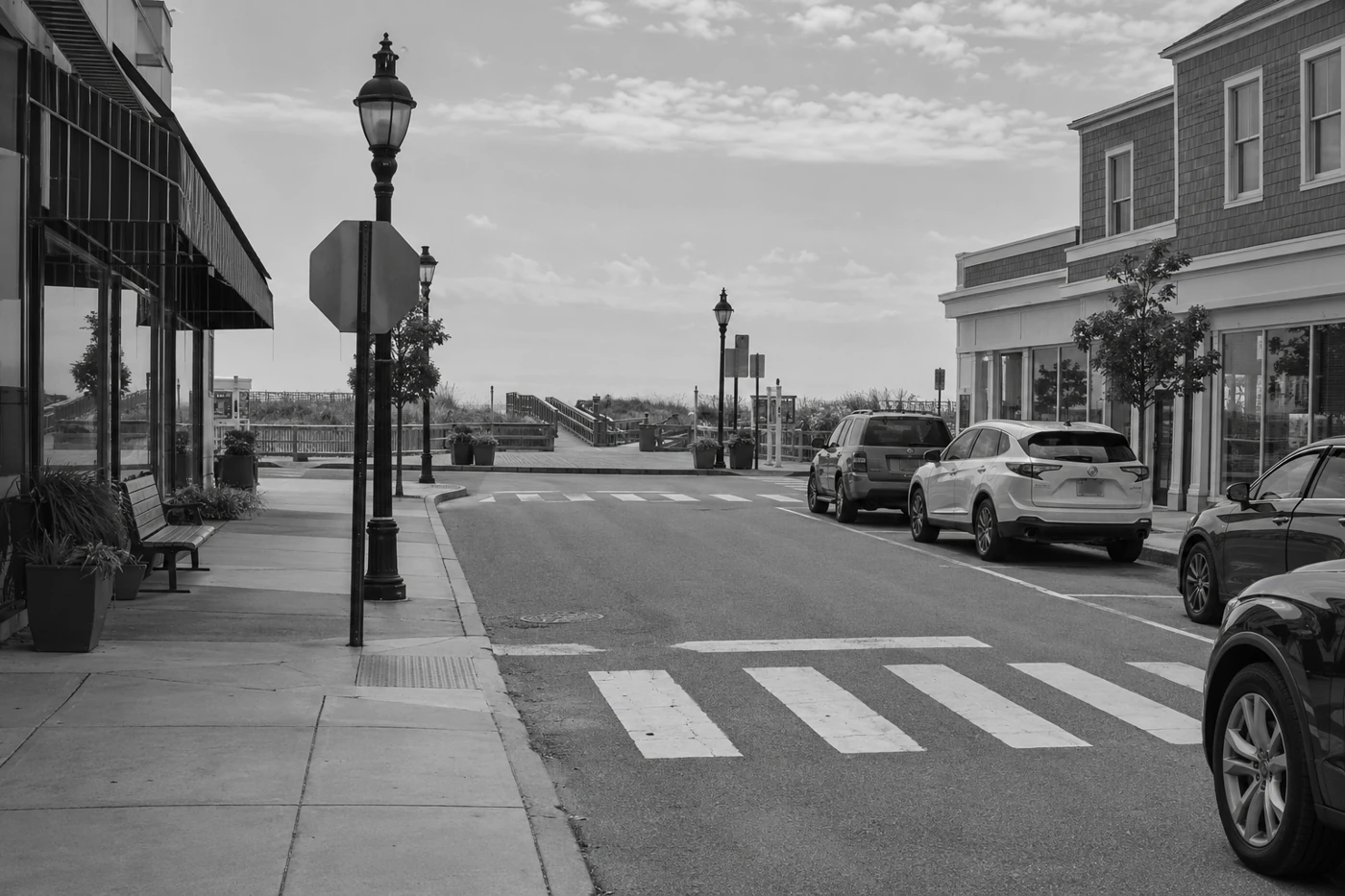
I would begin with where the pedestrian entered the route and where the vehicle came from. A crosswalk, traffic signal or staff direction may affect the analysis. The relevant rule should be applied to the actual location rather than a general belief about who always has priority.
Sight lines can change as vehicles move. A parked delivery van may block a view that appears clear later. Photographs from ordinary eye level can help explain the obstruction, while video may establish its position before the collision.
The pedestrian’s perspective deserves attention alongside the driver’s. The route people were invited to use and the available view may help explain the movement. I would develop that evidence so the account is not limited to what one participant reported immediately afterward.
Finding Useful Views of Pedestrian Traffic
A storefront camera may show the pedestrian’s approach without showing the impact. Another camera may show the vehicle entering the block. Those recordings can be useful together when their timing and limitations are understood.
I would identify cameras along the approach, not only at the final location. A focused preservation request should explain the relevant date and period. Businesses may routinely overwrite recordings, so prompt attention can matter even when the legal filing deadline is much later.
Access may require permission or formal legal process. A camera’s presence does not guarantee that it recorded or retained the event. We should investigate what exists and use it accurately rather than imply that footage can always be obtained.
Understanding Witness Accounts
A witness who watched the approach can provide different information from someone who turned after hearing the impact. I would ask where the person was and what first drew their attention. That helps establish the part of the event their account can support.
Different accounts do not always mean someone is being untruthful. The viewpoints may differ, or an obstruction may have limited one person’s view. Comparing the accounts with the physical setting can help explain the discrepancy.
Your own recollection is important even if it is incomplete. Describe what you remember without filling uncertain details with assumptions. Independent evidence can help develop the sequence and clarify questions that were impossible to answer in the immediate aftermath.
Applying Traffic Rules and Shared-Fault Principles
New Jersey crossing rules impose duties on drivers and pedestrians depending on the location and signals. A driver must exercise the care required by the circumstances. The civil inquiry connects any failure in that duty to the resulting harm.
If shared fault is alleged, New Jersey’s comparative-negligence framework needs careful application. The general eligibility comparison concerns the injured person’s negligence relative to the person or combined persons against whom recovery is sought. The assigned percentage can reduce damages, and separate rules govern allocation among defendants.
An adjuster’s early percentage should be examined against the evidence. It is not a final judicial finding. I would identify the facts supporting our position and explain any genuine uncertainty rather than accept a round number without analysis.
Considering Other Participants and Coverage
A vehicle used for rideshare or delivery may raise work-related responsibility and insurance questions. Its status at the time of the incident can matter. The collision investigation and the coverage review should be coordinated so relevant protections are identified.
A public roadway condition may occasionally warrant separate investigation. Public-entity claims involve Tort Claims Act standards and possible immunities. An adult’s claim generally raises a 90-day notice requirement, subject to statutory rules and exceptions. I would evaluate that issue promptly if the facts support public responsibility.
Medical-payment coverage also needs an individual review based on the person, vehicle and applicable policies. A dispute about which insurer handles a bill should be kept distinct from the liability investigation. The client should understand the purpose of each claim being pursued.
Documenting What the Injury Has Meant
A pedestrian injury can affect ordinary mobility and daily responsibilities in ways that are not fully apparent in the initial report. Medical providers should assess the injury and appropriate restrictions. Your description can explain how those restrictions affect work or home life.
I would develop that history with supporting records and avoid making a premature settlement estimate before important facts are available. The goal is to present the supported consequences of the injury and give the client a reasoned explanation of the options.
Questions About Pedestrian Traffic Crashes
What if the police report does not include my full account?
Tell me which part is missing or inaccurate and why. The report is important, but other evidence may help clarify the event. We can investigate the underlying facts and address discrepancies through appropriate channels.
Can I contact you if I was outside a marked crosswalk?
Yes. The particular duties and facts need review. A location outside a marked crosswalk should not substitute for examining visibility, vehicle movement and the applicable rules. You can describe the event and receive an individual assessment.
Sources and Further Reading
About Michael B. Fusco
I am Michael B. Fusco, a New Jersey personal injury lawyer Certified by the Supreme Court of New Jersey as a Civil Trial Attorney. I help injured people understand their options and develop the evidence needed to present their claims. My approach is to explain what we know, identify what still needs investigation and keep you informed as the case develops.
Discuss Your Injury With Mike
If you were injured and have questions about the circumstances discussed here, I am happy to talk with you. We can review the information you have and discuss what further investigation may help. Call 732-465-8733 or contact Fusco Law for a free personal injury consultation.
General Information
This article provides general information, not legal advice. The law’s application depends on the facts of the particular matter. Contacting Fusco Law does not establish an attorney-client relationship; representation begins only after a written agreement.