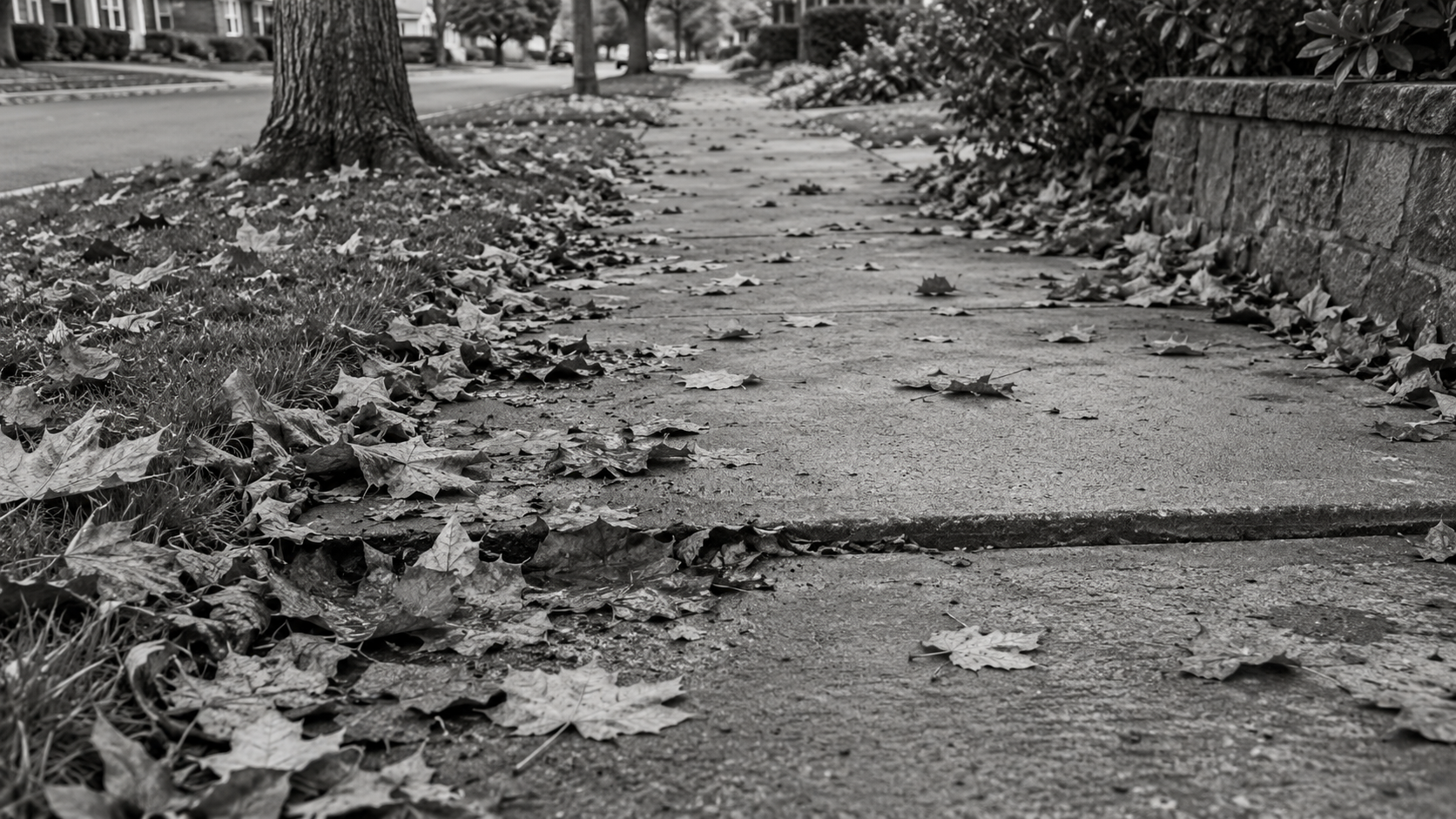
What do wet leaves tell us about responsibility?
A fall involving wet leaves and poor lighting deserves an investigation of the entire walking route. A slippery accumulation may combine with a concealed defect or a dimly lit change in level. I would examine how those conditions contributed to the injury and who was responsible for addressing them.
Photographs and accounts from the time of the fall can help establish the original conditions. Later photographs may still be useful when their timing is clear. I would place them alongside maintenance records and other observations to develop an accurate account of what you encountered.
How does early darkness change the investigation?
I examine maintenance and lighting together to explain the conditions you actually faced. A curb edge or damaged surface may be difficult to recognize in the available light. Checking fixtures and the shadows along the route can help explain the visibility more precisely than sunset time alone.
A comparison visit may help document the layout and available lighting when conditions are sufficiently similar. Any differences should be recorded so the images can be understood in context. Keep the original photographs. They preserve a reliable starting point for assessing what the scene showed.
How long had the wet leaves been present?
Earlier complaints, inspections or employee observations may help establish notice of the condition. I would investigate how long the accumulation had been there and the opportunity for reasonable maintenance to address it. Those are facts we can seek through records and witnesses, even when they are not known to you at the outset.
Cleanup records can show the property's maintenance practices and what was reportedly done that day. Comparing them with photographs and witness accounts helps establish the actual response at the location. The legal question is reasonable care in the circumstances, and the investigation should develop the evidence needed to answer it.
Who was responsible for the walkway?
Ownership and daily maintenance may be divided. A landlord may control a common route while a contractor performs cleanup. The agreement and actual practice can help identify responsibilities. If a broken sidewalk was concealed, the duty to repair it may differ from the duty to clear leaves.
Public-property claims require separate attention. A claim against a municipality is not evaluated exactly like a claim against a private store. Public-entity standards and notice requirements may apply, generally including a 90-day notice period subject to exceptions. The investigation should identify the proper entity promptly.
What should an injured person preserve?
If it is safe to do so, photographs of the route and surrounding lighting can preserve useful detail. Keep the incident-report information and any witness contacts you have. Someone who saw the area before the fall may help establish the condition's history. Your lawyer can use those starting points to seek additional records.
Tell me what you remember about your footing and the area, even if the cause was not immediately clear. I would work to resolve those questions through the available evidence. A careful investigation can explain how wet leaves, lighting and the condition of the surface fit together, giving your claim the individual attention it deserves.
Related reading
Why Do Leaf-Covered Walkways Create Difficult Notice Questions?
Sources and further reading
About Michael B. Fusco
I am Michael B. Fusco, a New Jersey personal injury attorney Certified by the Supreme Court of New Jersey as a Civil Trial Attorney. My approach is to investigate the facts carefully and explain what the evidence supports. Read my biography and credentials.
Discuss your personal injury questions
If you were injured and have questions about your options, I am happy to discuss them with you. Bring the information you have, and we can talk about the work needed to investigate and pursue an appropriate personal injury claim. Contact Fusco Law or call 732-465-8733.
This article provides general information and does not constitute legal advice. Every matter depends on its facts and the applicable law. Contacting the firm does not by itself create an attorney-client relationship.