Mike’s Quick Answer
A fall at a street fair deserves an investigation into the condition of the walking route and who was responsible for it. A temporary event can involve both public property and private businesses. The organization named on the banner may be different from the company that placed a cable cover or maintained the area where you fell.
I work to identify who controlled the walking route and preserve the evidence that gives your claim a solid foundation. Temporary conditions can change quickly once an event closes. That makes early photographs and a clear location helpful, but a person who was injured should not be expected to manage an entire investigation at the scene. We can look for other records and witnesses when you were focused on getting care.
Locating the Street Fair Condition That Caused the Fall
I would start by asking you to describe your route in ordinary terms. Which booth had you passed? Were you approaching an entrance or following a designated pedestrian lane? Those details can help locate the condition even when the fair has been dismantled. A nearby storefront can provide a fixed reference point.
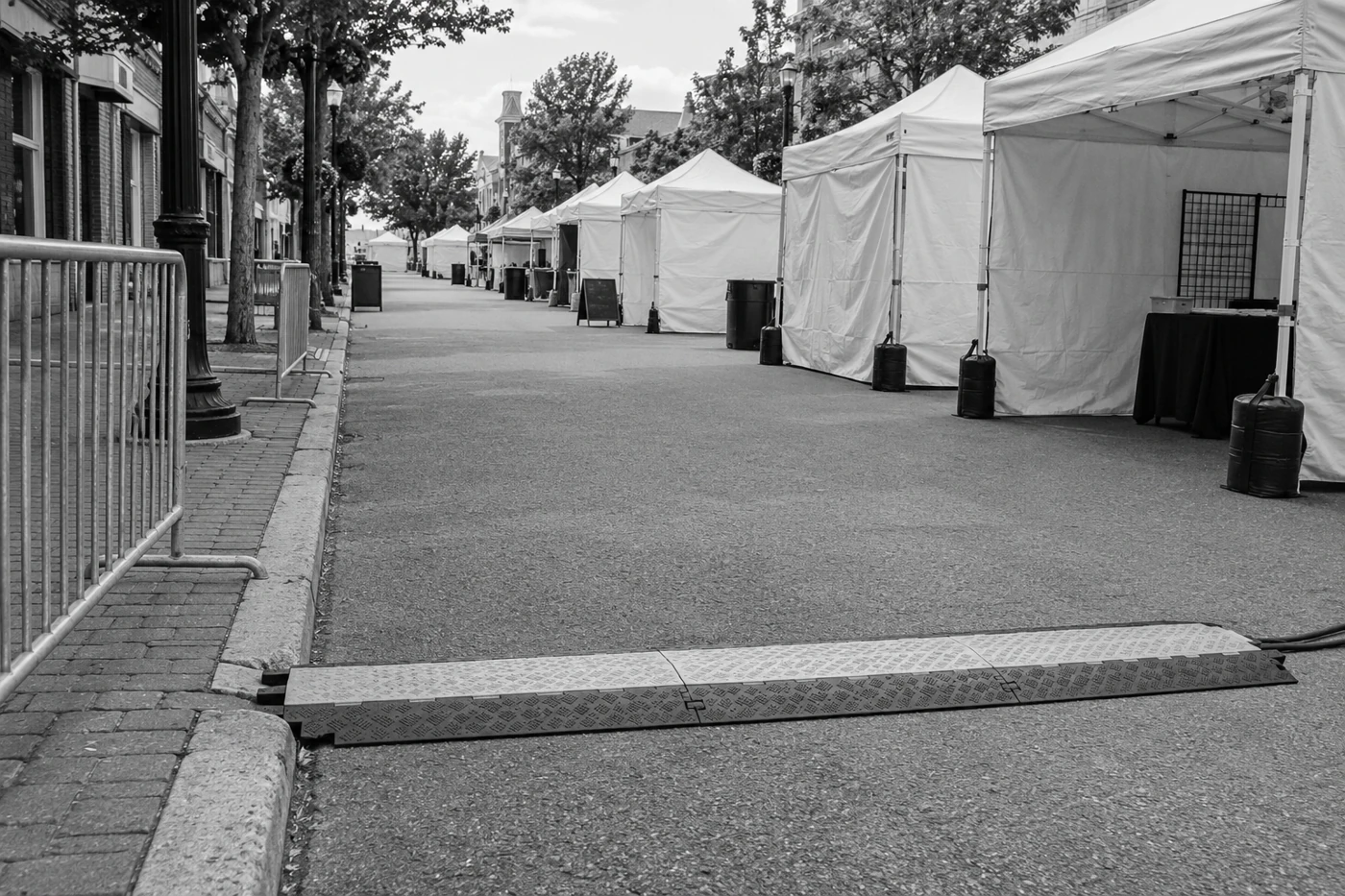
A close photograph may show a defect, while a wider photograph explains how someone encountered it. For example, the placement of a barrier may have directed visitors over a cable. The cable’s height and the route visitors were invited to use would both matter. I would examine those facts together rather than isolate a picture of the ground from the surrounding setup.
The defense may argue that the condition was visible. That question deserves a realistic assessment of the view. Displays or ordinary foot traffic may have affected what a visitor could see. The purpose of this investigation is to explain the setting fairly and establish why reasonable precautions were needed.
Finding the Responsible Participants
A municipality may own the street while an organizer decides where vendors can set up. A vendor may bring equipment into its assigned space. Another contractor may provide the barriers. The legal inquiry follows the particular condition that caused the injury and the responsibilities each participant undertook.
Event plans and vendor assignments can help connect an otherwise anonymous booth to a business. Contracts may explain who had inspection or maintenance duties. I would also look at what actually happened. A written plan can assign a responsibility that was not carried out, or a participant may have exercised control beyond what a brief description suggests.
The fact that a town issued a permit does not by itself establish liability. It does give us a place to begin identifying the event and the participants. A private business that created or controlled a hazard may have a separate duty even when the event took place on public land.
Preserving Street Fair Evidence After Closing
Equipment is often packed away the same evening. That is a practical reason to identify relevant records promptly. A nearby business may have camera footage showing the walkway before the fall. An incident report may identify the employee who responded. A witness may have noticed the condition earlier in the day.
I would tailor a preservation request to the location and time involved. A request for a specific camera view is more useful than an unexplained demand for everything from a large event. Preservation and obtaining the records are separate steps; formal legal process may be necessary if the material is not provided voluntarily.
If the condition has already been removed, the investigation can still continue. Prior photographs, setup records or witness accounts may show how it was arranged. Tell me what you remember and what you already have. We can determine which additional sources are worth pursuing without asking you to recreate details you did not observe.
Protecting Public and Private Claims
An adult’s claim against a public entity generally raises a 90-day Tort Claims Act notice requirement. The correct recipient and the contents of the notice matter. An event report serves a useful factual purpose, but it should not be assumed to satisfy that separate requirement. Limited exceptions and late-notice procedures require individual review.
Public-property liability also involves statutory standards and potential immunities. A private negligence claim follows a different analysis. I would explain those distinctions while investigating each participant’s actual role. Identifying a public entity should not cause us to overlook a private contractor that may also be responsible.
We would also document the injury’s effect on your life. A fall can interfere with ordinary activities in ways that are not obvious from an initial photograph. Your description, considered with medical evidence and relevant work records, helps present the consequences accurately.
Questions After a Street Fair Injury
What should I bring to a consultation?
Bring what is readily available, such as photographs, the event name and any report number. An email confirmation or receipt may help identify the vendor nearest the location. You can contact us before collecting everything; part of my job is identifying what needs to be obtained.
What if nobody gave me an incident report?
We can ask whether one was created and investigate other sources. A missing report is a reason to develop the evidence carefully, not to assume the incident cannot be established. Your account is an important starting point for that work.
Sources and Further Reading
About Michael B. Fusco
I am Michael B. Fusco, a New Jersey personal injury lawyer Certified by the Supreme Court of New Jersey as a Civil Trial Attorney. I help injured people understand their options and develop the evidence needed to present their claims. My approach is to explain what we know, identify what still needs investigation and keep you informed as the case develops.
Discuss Your Injury With Mike
If you were injured and have questions about the circumstances discussed here, I am happy to talk with you. We can review the information you have and discuss what further investigation may help. Call 732-465-8733 or contact Fusco Law for a free personal injury consultation.
General Information
This article provides general information, not legal advice. The law’s application depends on the facts of the particular matter. Contacting Fusco Law does not establish an attorney-client relationship; representation begins only after a written agreement.