Mike’s Quick Answer
Safety during college dorm move-in may be divided among the institution and outside companies. The building owner may handle permanent maintenance while another organization directs unloading or supplies equipment. I would investigate the responsibility connected to the particular condition that caused the injury.
I trace who controlled the move-in operation so that the people responsible for safety can be identified from the evidence. A family should not have to understand the campus’s contracts before asking for help. The location and a clear description of the event provide a starting point for finding those records.
Understanding the College Dorm Move-In Route
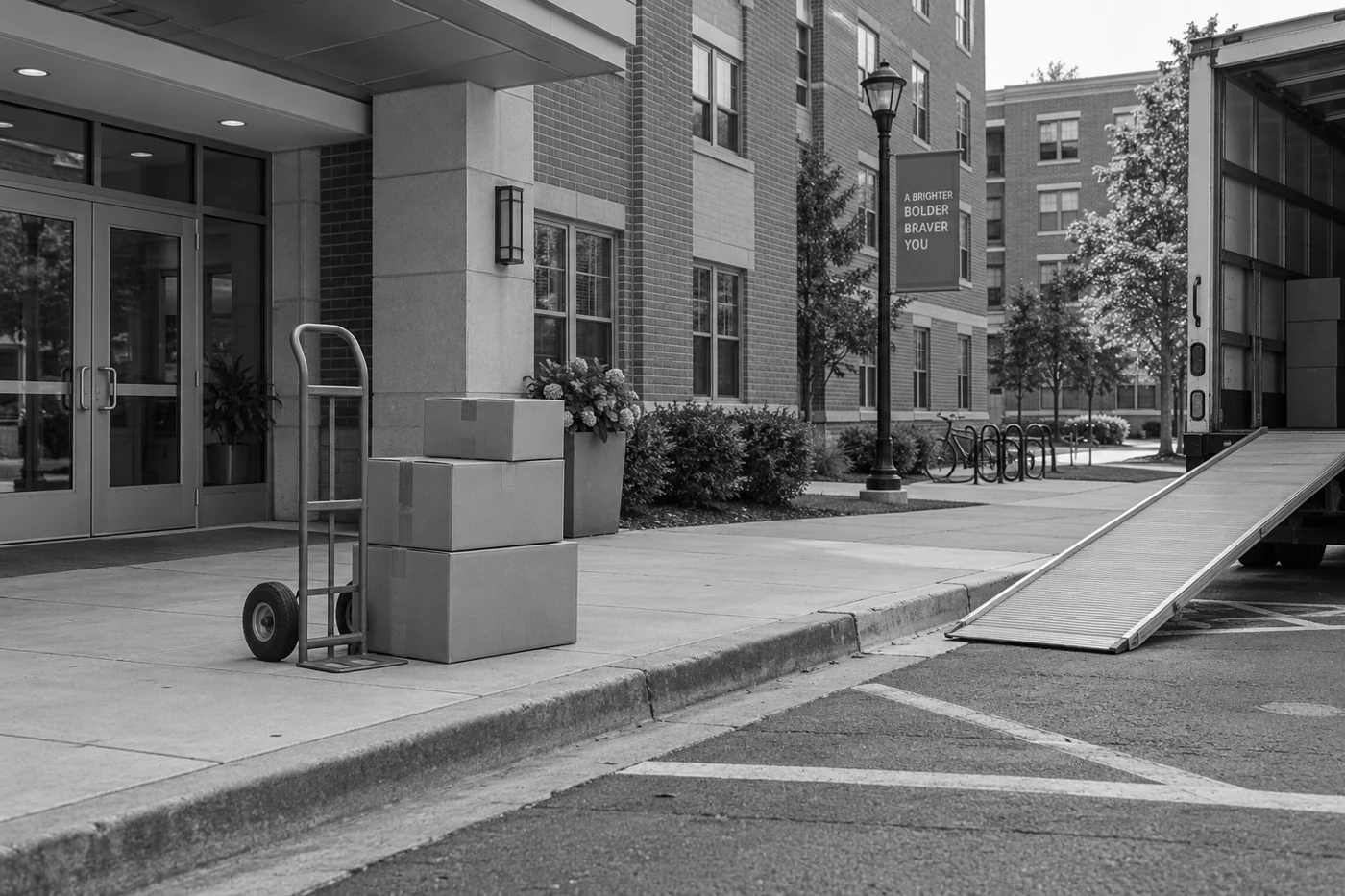
An entrance designed for ordinary foot traffic may become an unloading point for several hours. Carts and vehicles can alter the route people use. Reasonable precautions need to be evaluated in light of the activity the institution invited.
I would want to understand how visitors were directed through the area. A designated path can help explain why someone encountered a particular ramp or obstruction. The physical condition and the instructions should be considered together, rather than assume the person freely chose among routes that were not actually available.
The investigation should identify the specific issue. A defective step raises different questions from a cart supplied in poor condition. Keeping that distinction clear helps request the right records and avoid broad allegations that do not explain the injury.
Separating Property Ownership From Operational Control
A college may lease a residence hall or use a property manager. An outside company may provide moving assistance. Contracts can explain which organization undertook inspection or maintenance responsibilities for the area involved.
Actual conduct matters too. A company may have placed equipment or directed visitors even though its name was not displayed prominently. I would compare the agreements with witness accounts and operational records to establish what each participant did.
The person who received an incident report may be able to identify a contractor or supervisor. That does not automatically make the recipient responsible, but it can provide a useful lead. An investigation often develops through these ordinary records rather than a single document that answers everything.
Investigating College Dorm Move-In Equipment
If a ramp or cart was involved, I would identify its owner and how it was provided for use. An inspection or repair record may show whether a condition had been reported. Photographs can help explain the equipment’s position and appearance at the time.
An elevator issue may require maintenance and service information from a specialized contractor. The nature of the malfunction matters. A qualified expert may be needed to evaluate how the equipment operated and whether a maintenance failure contributed.
The injured person’s account remains important alongside technical records. Explain what you were doing and what changed unexpectedly. You do not need to know the mechanical cause before discussing the claim. Determining that cause may be part of the investigation.
Reviewing the Institution’s Legal Status
A public college can raise Tort Claims Act requirements, including statutory standards and possible immunities. An adult’s claim generally has a formal notice requirement within 90 days, subject to the governing rules and exceptions. A minor’s own timing protections need separate consideration.
A private institution follows a different legal path and may raise other defenses, including issues related to charitable status. The word college does not establish one set of rules for every campus. I would confirm the actual entity and the relationship of the injured person to the activity.
Outside contractors also need individual analysis. A public institution’s involvement does not automatically answer a private company’s responsibility. Each claim should be evaluated under the applicable law and the evidence of that participant’s work.
Preserving a Scene That May Change Quickly
Boxes are unpacked and temporary ramps are removed as move-in ends. That can happen as part of normal operations. Early photographs or recordings may preserve how the route looked when the injury occurred.
If no photographs were taken, we can look for other sources. A move-in plan may establish the assigned unloading area. A witness may remember where equipment was placed. Maintenance records may document a problem reported before or after the incident.
I would request preservation of relevant material with enough detail to identify the event. Access may require further legal process. The first step is making sure potentially useful information is identified while the broader investigation proceeds.
Documenting the Effect on the Student or Family Member
An injury during move-in may disrupt the start of a semester or affect a parent’s work. Those consequences should be explained accurately and supported where possible. Medical providers address diagnosis and appropriate restrictions; the client can explain how those restrictions affected ordinary responsibilities.
The assessment should develop with the evidence. I would explain what is known and which information is still needed before discussing a resolution. Early investigation can protect the claim without forcing a premature estimate of its value.
Questions About College Dorm Move-In
What if a student helper was involved?
We should determine the helper’s relationship to the institution or vendor and what task was being performed. An informal description such as volunteer does not answer every duty or agency question. The actual arrangement needs review.
Can we ask for help after leaving campus?
Yes. Provide the location and the information you have. We can discuss preservation requests and the institution’s legal status without requiring the injured person to return to an unsafe area or manage the investigation alone.
Sources and Further Reading
About Michael B. Fusco
I am Michael B. Fusco, a New Jersey personal injury lawyer Certified by the Supreme Court of New Jersey as a Civil Trial Attorney. I help injured people understand their options and develop the evidence needed to present their claims. My approach is to explain what we know, identify what still needs investigation and keep you informed as the case develops.
Discuss Your Injury With Mike
If you were injured and have questions about the circumstances discussed here, I am happy to talk with you. We can review the information you have and discuss what further investigation may help. Call 732-465-8733 or contact Fusco Law for a free personal injury consultation.
General Information
This article provides general information, not legal advice. The law’s application depends on the facts of the particular matter. Contacting Fusco Law does not establish an attorney-client relationship; representation begins only after a written agreement.