Mike’s Quick Answer
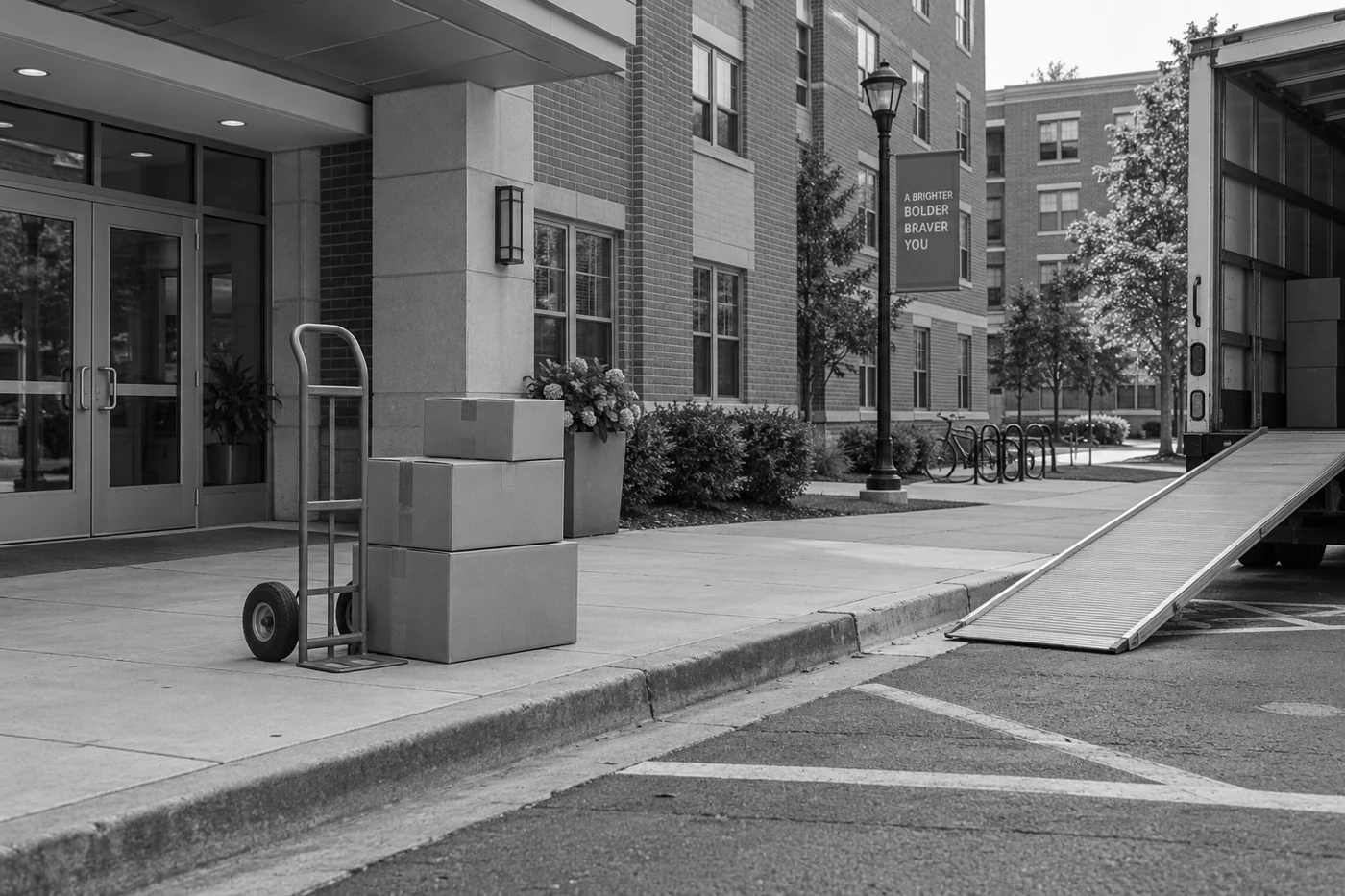
Double-parked move-in traffic can contribute to a crash by narrowing a lane or blocking a driver’s view of a pedestrian. A vehicle does not have to make contact to play a meaningful role. The investigation should examine how its position affected the movement of the people involved.
I investigate the obstruction and the moving traffic together so that every supported cause of your injury is considered. A parked vehicle, a moving driver and a temporary traffic operation may each require attention. We should establish their actual roles rather than assume the only responsible vehicle is the one showing collision damage.
How Double-Parked Move-In Traffic Affected the Route
I would start with where the vehicles were positioned before the event. A moving truck may have occupied part of a lane or hidden the approach to a crossing. A driver may have been directed around it. Those details help explain how the obstruction became part of the sequence.
A photograph taken after vehicles move can be incomplete. Earlier pictures, video or witness observations may show the arrangement that existed at the time. I would compare those sources instead of treat the final scene as a perfect representation of the approach.
The obstruction still needs to be connected to the injury. The fact that a vehicle was improperly parked is relevant, but the claim should explain what that placement caused. A supported account of a blocked sight line is more useful than relying only on the phrase double parking.
Examining the Moving Driver’s Response
A driver approaching an obstruction remains responsible for reasonable care. Speed and the available opportunity to observe traffic may matter. I would investigate what the driver could see and how the vehicle was controlled as it moved around the parked vehicle.
An obstruction can create a difficult situation without excusing every response to it. The question is how the conduct and condition combined. Video or measurements may help establish whether the driver had room to wait or whether a direction from traffic staff affected the choice of route.
The same care is needed when a pedestrian was involved. The person’s location and view should be evaluated in the actual setting. An account that considers only the driver’s perspective may miss why the pedestrian used a particular route or could not see an approaching vehicle.
Investigating Temporary Traffic Directions
A college or building manager may arrange a special unloading area. Security staff or an outside vendor may direct vehicles. I would determine who created the plan and who had authority to change it when congestion developed.
Written instructions can help establish what was intended. Witnesses or recordings may show what happened in practice. If drivers received conflicting directions, we should identify the source and timing of those directions rather than describe the entire operation generally as chaotic.
The organization’s legal responsibility depends on its role and the applicable duty. A property owner is not automatically liable for every driver’s decision. A claim should connect a particular failure in the operation to the injury through supporting evidence.
Applying New Jersey’s Shared-Fault Rules
New Jersey comparative-negligence law can permit recovery even when an injured person shares some responsibility. The general eligibility comparison is with the negligence of the person or combined persons against whom recovery is sought. Damages are then reduced by the injured person’s assigned percentage, and separate allocation rules determine payment responsibilities.
That is more precise than comparing the injured person with each defendant in isolation in every situation. Identifying all potentially responsible parties matters. I would explain how the rule applies to the evidence in the particular case rather than use a percentage offered by an adjuster as the final answer.
A parking ticket may support one part of the history. The underlying facts still need review. The civil case addresses how the conduct caused harm and the losses that resulted, which may require evidence beyond the traffic proceeding.
Preserving Evidence of Double-Parked Move-In Traffic
Temporary arrangements can disappear when move-in ends. I would look for recordings along the approach and records of the unloading plan. A witness who saw the placement of a truck before the collision may provide a useful perspective even if they did not see the impact itself.
The vehicle owners and the organizations involved may have different policies. A delivery or moving vehicle can raise commercial coverage questions. PIP or other medical-payment provisions need a separate review based on the injured person’s circumstances.
Public ownership can add Tort Claims Act requirements and possible immunities. An adult’s public-entity claim generally has a 90-day notice issue, subject to statutory rules and exceptions. I would identify that possibility promptly rather than wait for every responsibility question to be resolved.
Questions About Double-Parked Move-In Traffic
Can I pursue a claim if the obstructing vehicle drove away?
We can investigate whether its identity can be established from witnesses, recordings or move-in records. Tell me what you remember without guessing. Other responsible participants and applicable coverage may also warrant review.
What if I was following a staff member’s directions?
That is relevant information. I would examine what you were told, who gave the direction and the conditions at the time. It should be considered as part of the full account of how the collision occurred.
Sources and Further Reading
About Michael B. Fusco
I am Michael B. Fusco, a New Jersey personal injury lawyer Certified by the Supreme Court of New Jersey as a Civil Trial Attorney. I help injured people understand their options and develop the evidence needed to present their claims. My approach is to explain what we know, identify what still needs investigation and keep you informed as the case develops.
Discuss Your Injury With Mike
If you were injured and have questions about the circumstances discussed here, I am happy to talk with you. We can review the information you have and discuss what further investigation may help. Call 732-465-8733 or contact Fusco Law for a free personal injury consultation.
General Information
This article provides general information, not legal advice. The law’s application depends on the facts of the particular matter. Contacting Fusco Law does not establish an attorney-client relationship; representation begins only after a written agreement.