Mike’s Quick Answer
Lane-shift crashes can involve both a driver’s conduct and the way a work zone was arranged. Temporary signs and markings should be examined as part of the route the driver actually encountered. A plan in a project file may not show where a barrier or cone stood at the time of the collision.
I compare the traffic plan with the road drivers actually encountered to identify the decisions that contributed to your injury. That investigation can help explain a confusing transition and determine whether a contractor, public entity or another driver had a supported role in causing the crash.
Understanding the Approach to the Lane Shift
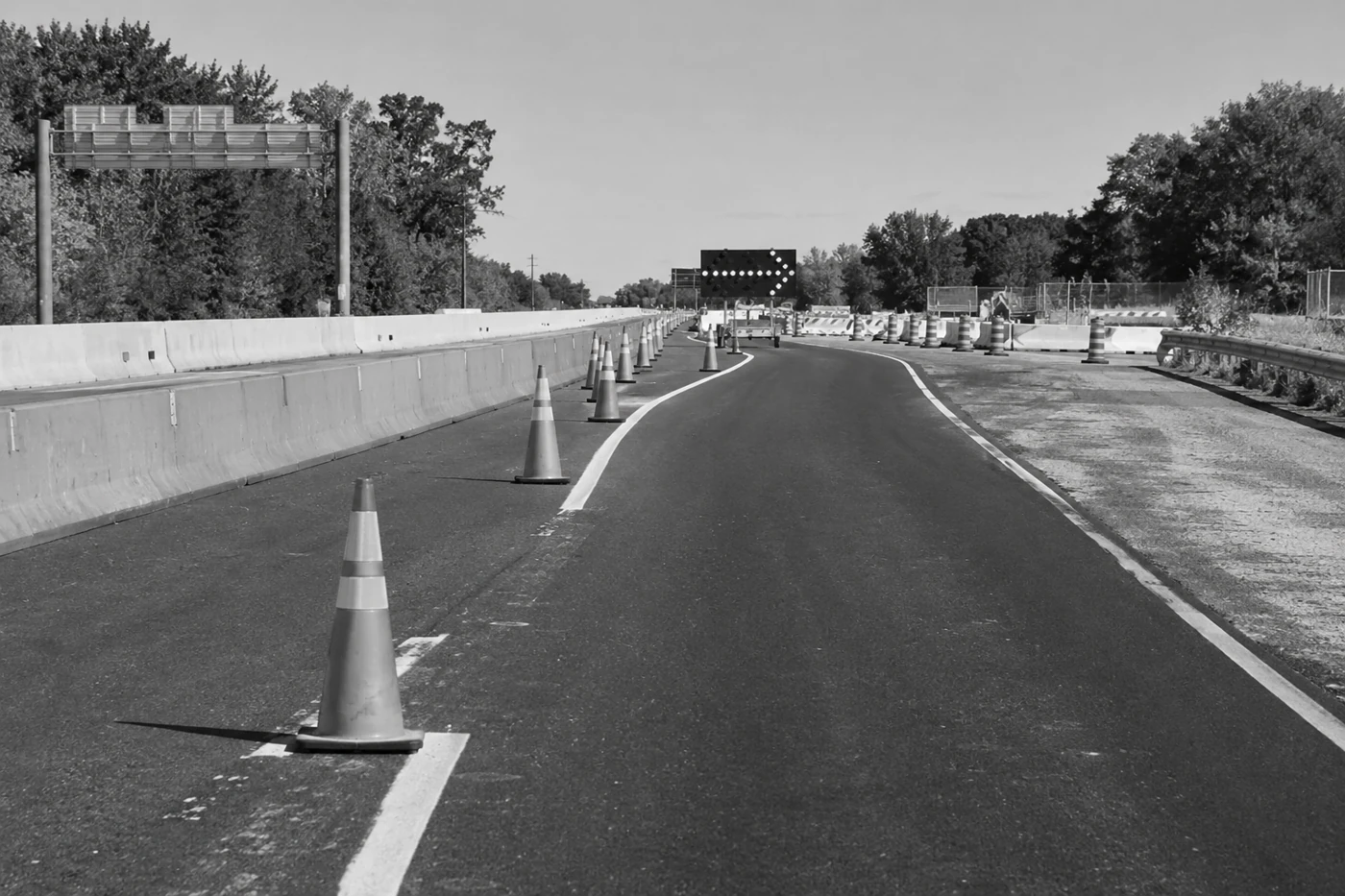
A lane shift asks drivers to change course, sometimes while traffic is slowing. The warning sequence matters. I would want to understand where drivers first received notice and how the temporary lane connected with the road ahead.
Conflicting markings can create a specific issue. An old stripe may suggest one path while cones direct another. A photograph of the entire approach can help explain that problem better than a close-up of a single device. The time of day and lighting may also affect how the arrangement appeared.
The appropriate traffic-control standards and approved plans should be reviewed for the particular project. An expert may be needed to evaluate the layout. The purpose is to answer a real question about the guidance drivers received, rather than assume that any collision in a work zone proves a defect.
Examining Driver Conduct in Lane-Shift Crashes
Drivers must still use reasonable care as traffic patterns change. Following too closely or approaching stopped traffic too quickly may contribute to an injury. I would examine those actions in the context of the warnings and space available.
A confusing transition and a driver’s negligence can both matter. New Jersey permits responsibility to be allocated among negligent participants under the applicable rules. We should identify each supported cause rather than choose between blaming the road and blaming a driver before the investigation is complete.
Your account may identify a sudden merge or an unexpected stop. Video and vehicle damage can help establish what happened next. If different drivers describe the lane arrangement differently, the scene records may help resolve that disagreement.
Project Responsibilities in Lane-Shift Crashes
A public agency may own the roadway while a contractor installs and maintains the temporary controls. A separate engineering firm may have designed the plan. The relevant contracts and work records can help establish who undertook the task connected to the crash.
I would also compare the assignment with actual performance. A daily log may show that the traffic pattern changed that morning. An inspection record may identify a displaced device. Those details can explain a condition that is no longer visible by the time someone returns to take photographs.
Responsibility should follow the supported duty and conduct. A company’s name on a project sign is useful for identification, but it is not proof that the company controlled every part of the site. Tracing the work helps direct the claim toward the appropriate participants.
Preserving a Temporary Roadway Scene
Work zones change as construction progresses. A layout can move overnight without any intention to conceal evidence. That makes early preservation particularly useful. Dashcam recordings or official photographs may document the exact phase involved.
If photographs can be taken safely from a lawful location, the full approach is helpful. Do not enter the work area or stop in active traffic to obtain evidence. An investigation can request project records and consider an appropriate professional inspection without putting the injured person at risk.
I would identify the date and approximate time when requesting records. The relevant work phase may be more precise than the project’s overall name. Connecting that phase to the collision helps avoid relying on plans for an arrangement that was not yet installed or had already been removed.
Addressing Public-Entity Rules and Coverage
A claim against a public entity is governed by the Tort Claims Act and may involve statutory immunities or design issues. An adult’s claim generally raises a 90-day formal notice requirement, subject to the applicable rules and exceptions. I would assess that question early while the facts develop.
A private contractor’s potential liability requires its own analysis. Public approval of a plan and the contractor’s execution of it may present different questions. The legal theory should be based on the actual conduct and current law.
Medical-payment and liability coverage should be reviewed alongside the investigation. PIP may address qualifying medical expenses under its terms, while the injury claim examines responsibility and damages. Identifying a roadwork issue does not remove the need to understand the available vehicle and business policies.
Questions About Lane-Shift Crashes
What if the cones were moved before anyone photographed them?
We can investigate other sources, including recordings and project logs. A witness may also have seen the earlier arrangement. The absence of a later photograph of the same setup is a reason to investigate further, not to assume the condition cannot be shown.
Does a ticket against the other driver resolve the case?
It may be relevant, but the civil claim requires a review of the underlying evidence and the injury. I would also examine whether the temporary layout contributed when the facts support that inquiry.
Sources and Further Reading
About Michael B. Fusco
I am Michael B. Fusco, a New Jersey personal injury lawyer Certified by the Supreme Court of New Jersey as a Civil Trial Attorney. I help injured people understand their options and develop the evidence needed to present their claims. My approach is to explain what we know, identify what still needs investigation and keep you informed as the case develops.
Discuss Your Injury With Mike
If you were injured and have questions about the circumstances discussed here, I am happy to talk with you. We can review the information you have and discuss what further investigation may help. Call 732-465-8733 or contact Fusco Law for a free personal injury consultation.
General Information
This article provides general information, not legal advice. The law’s application depends on the facts of the particular matter. Contacting Fusco Law does not establish an attorney-client relationship; representation begins only after a written agreement.