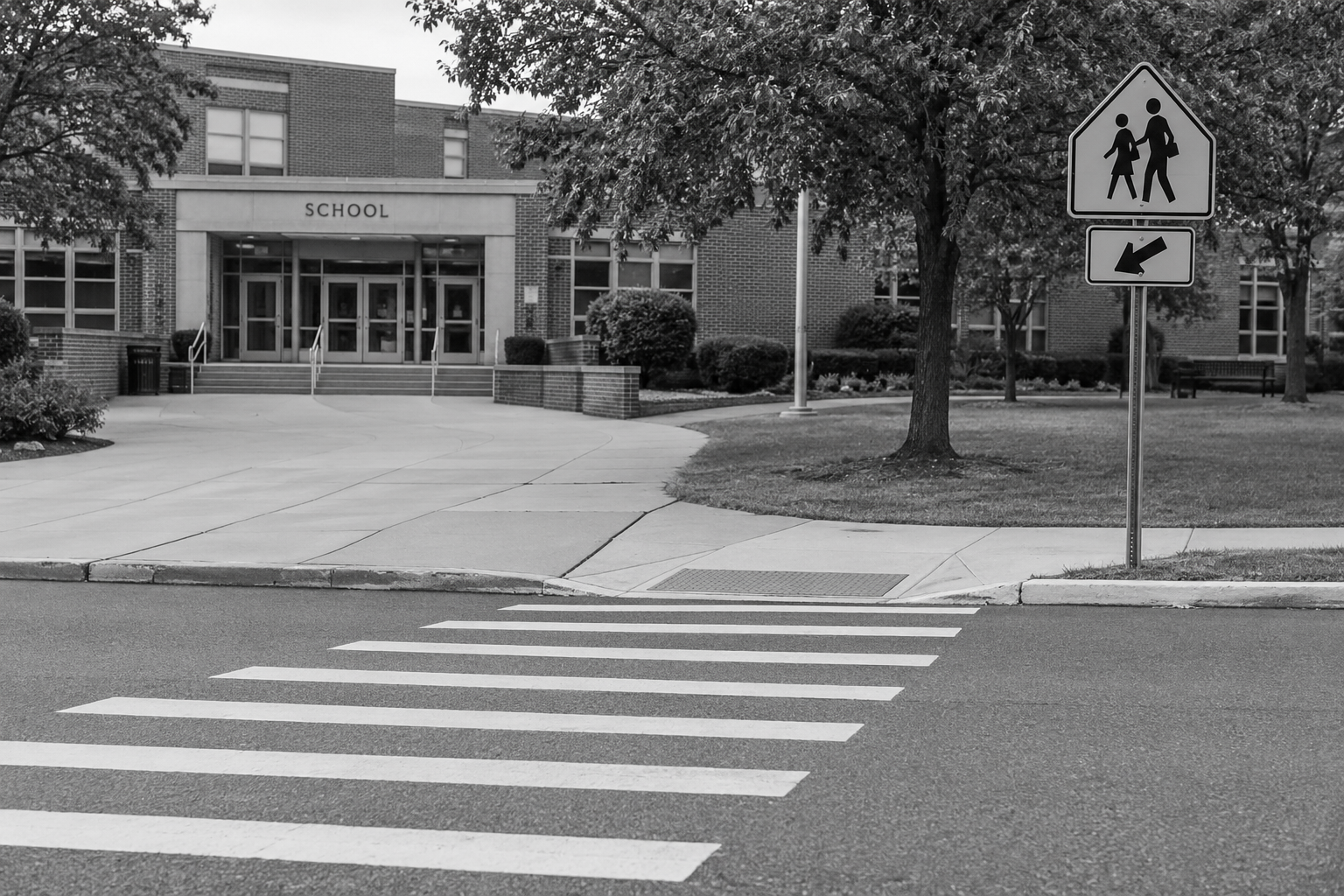
How is a school crossing claim evaluated?
A school crossing collision deserves prompt attention to the driver's approach and the protections available to pedestrians. I would examine the crossing conditions and how the people and vehicles moved. That investigation can help establish a failure to use the care required around school traffic.
I work to support your family’s account with evidence of the driver’s approach and the crossing conditions. Recordings, witnesses and photographs may help show when the pedestrian entered and what the driver could see. Identifying those sources early helps protect the opportunity to explain the full sequence.
What duties apply at the crosswalk?
New Jersey requires drivers to stop and remain stopped for pedestrians in marked crosswalks under the conditions specified by law. Traffic signals and other circumstances also affect the analysis. A pedestrian cannot simply enter a vehicle’s path when it is too close to yield or stop.
I would apply those rules to the actual timing and movement shown by the evidence. A failure to observe a pedestrian may deserve close examination even where the crossing point is disputed. Developing the approach and opportunity to respond helps connect the applicable duty with the conduct that caused the injury.
Account for the care required around children
A child's age and capacity can affect the standard used to assess conduct. Drivers must also exercise reasonable care in the circumstances, including the predictable presence of children near a school. I would examine the evidence under those standards so the child's situation receives the consideration the law requires.
If an insurer attributes fault to a child, that position deserves a careful response grounded in the facts and the applicable standard. I would examine the driver's opportunity to observe and react, along with the crossing conditions. Your family should have an advocate addressing those issues and explaining the developing evidence.
What if a crossing guard or signal was involved?
The guard’s employer and assigned role should be confirmed. A municipality, district or contractor may have different responsibilities, and the entity controlling a signal may be different again. Staff assignments and available recordings can help establish what happened.
If a public entity was involved, I would address the Tort Claims Act requirements and any potential immunities early. Formal notice generally requires attention within 90 days of accrual, subject to exceptions. Evaluating those requirements while seeking the police report and other records helps protect the opportunity to pursue a supported claim.
What school crossing evidence should be protected?
Photographs should show the crossing and approach, not just the point of impact. A parked vehicle or obstruction may affect what was visible. Recordings from nearby properties may be retained only briefly, so identifying them promptly is useful. Preserve original files where available.
I would review the available coverage for medical expenses alongside the liability claim. Household auto coverage may be relevant to an injured pedestrian, depending on the policies and circumstances. Addressing benefits and preserving collision evidence together helps the family understand what can be pursued while recovery continues.
Related reading
Why Can Event Traffic Plans Matter After a Pedestrian Collision?
Sources and further reading
About Michael B. Fusco
I am Michael B. Fusco, a New Jersey personal injury attorney Certified by the Supreme Court of New Jersey as a Civil Trial Attorney. My approach is to investigate the facts carefully and explain what the evidence supports. Read my biography and credentials.
Discuss your personal injury questions
If you were injured and have questions about your options, I am happy to discuss them with you. Bring the information you have, and we can talk about the work needed to investigate and pursue an appropriate personal injury claim. Contact Fusco Law or call 732-465-8733.
This article provides general information and does not constitute legal advice. Every matter depends on its facts and the applicable law. Contacting the firm does not by itself create an attorney-client relationship.