Mike’s Quick Answer
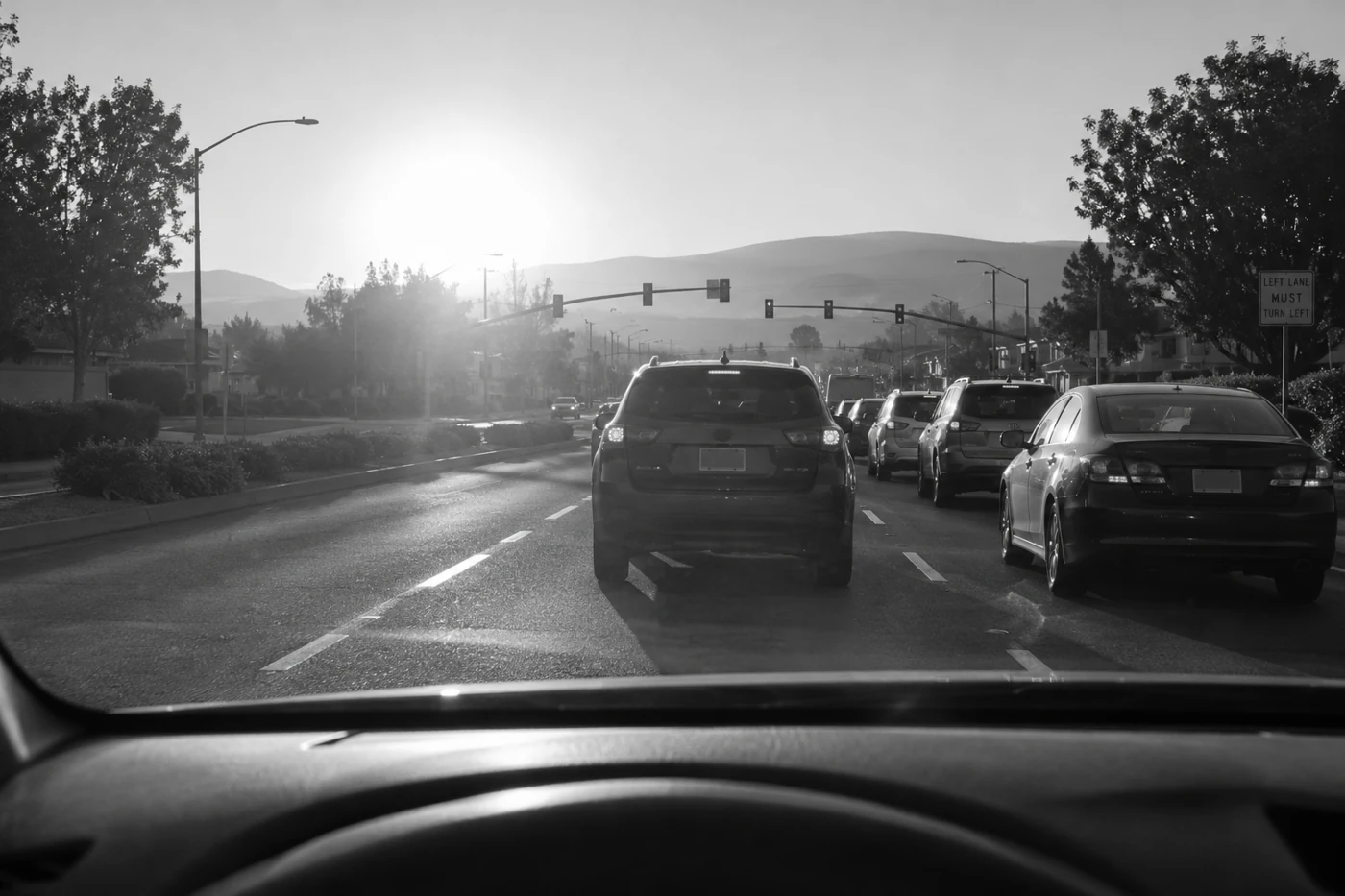
Sun glare is something I would investigate after a September commuter crash, particularly when a driver says the sunlight prevented them from seeing you. Poor visibility calls for care. The question is what the driver could reasonably have done as the conditions changed and whether that response would have prevented the injury.
I investigate how the driver responded to poor visibility so that your claim is supported by the full sequence of events. That means looking at the approach to the collision, rather than accepting a general explanation that the sun was bright. The time and direction of travel can often be checked against independent records. Those details help us evaluate the explanation and identify the evidence that supports your account.
How Sun Glare Affects the Duty to Drive Carefully
A driver is expected to account for conditions that affect visibility. If sunlight makes the road difficult to see, continuing at the same speed or following at the same distance may be unreasonable. The appropriate response depends on the road. A sudden stop in moving highway traffic can create its own danger, so the investigation needs to consider the available choices in their actual setting.
There is an important difference between a momentary change that could not reasonably be anticipated and driving for some distance while unable to see what is ahead. I would want to understand how long the problem existed. A driver’s statement about glare can lead to useful questions about earlier opportunities to slow down or increase the distance from another vehicle.
Those questions are part of establishing negligence. They are not a reason to assume that either person is at fault before the records are reviewed. My responsibility is to develop an accurate explanation that can be supported if the insurance company challenges it.
Reconstructing Sun Glare From the Driver’s Seat
The sun’s position changes with the date, time and direction of travel. A photograph taken later in the afternoon may show a very different view. I would establish when the collision occurred before relying on photographs meant to recreate the conditions. A timestamp from a dashcam or another reliable record can help resolve an uncertain estimate.
The surroundings matter as well. A driver may emerge from shade into direct sunlight just before an intersection. A building or a curve may change the view. Photographs taken under reasonably similar conditions can help explain that transition, provided we are clear about the differences between the photographs and the actual event.
The vehicle can also provide useful information. I would examine whether something about the windshield or the available sun visor contributed to the visibility problem when the facts support that inquiry. An expert may be needed to evaluate sight distance or reaction time. That work should answer a real disputed question, rather than add technical detail without a purpose.
Using Video and Witnesses Together
Dashcam footage can be valuable even if it does not reproduce exactly what a person saw. A camera adjusts its exposure differently from the human eye. It may still show the vehicle’s movement, the traffic ahead or when the driver began braking. Those observations can be compared with witness accounts and physical damage.
I would ask a witness where they were looking and what they could see before the impact. Someone who saw the approach may provide information that a person who heard the collision cannot. Both accounts can be useful when their limits are understood. We can then identify which parts of the sequence are supported and which still require investigation.
Early preservation is helpful because a recording may be overwritten or a vehicle repaired. Your safety and medical care come first. If you were unable to take photographs, we can still investigate other sources. You do not have to arrive at the first consultation with a complete reconstruction of the accident.
Addressing Other Contributing Causes
Sun glare may be one part of a collision involving several vehicles. An unsafe lane change or inadequate following distance may also matter. New Jersey’s comparative-negligence law permits responsibility to be allocated when more than one person’s negligence contributed. An insurer’s proposed percentage is a position that can be examined against the evidence.
Occasionally, a traffic signal or a roadway condition warrants separate investigation. A claim against a public entity involves different statutory requirements and possible immunities. The Tort Claims Act generally requires notice within 90 days for an adult’s claim, subject to its accrual rules and exceptions. I would address any applicable deadline while determining whether the roadway actually contributed.
The injury deserves the same care as the collision evidence. Medical records help explain the diagnosis, while your account can show what recovery has meant at work or at home. I would work to connect those practical effects with the supporting evidence when presenting the claim.
Questions Clients Ask About Glare Crashes
What if the other driver says everyone was having difficulty seeing?
That may describe the conditions, but each driver’s response still matters. I would compare the available time and space with what the driver actually did. Shared exposure to bright sunlight does not answer how the collision occurred.
Can I get help if I have no video?
Yes. We can discuss the police investigation, potential witnesses and other records that may help. Video is useful when available, but it is not the only way to develop a claim. The first step is understanding what happened and identifying the evidence that can still be obtained.
Sources and Further Reading
About Michael B. Fusco
I am Michael B. Fusco, a New Jersey personal injury lawyer Certified by the Supreme Court of New Jersey as a Civil Trial Attorney. I help injured people understand their options and develop the evidence needed to present their claims. My approach is to explain what we know, identify what still needs investigation and keep you informed as the case develops.
Discuss Your Injury With Mike
If you were injured and have questions about the circumstances discussed here, I am happy to talk with you. We can review the information you have and discuss what further investigation may help. Call 732-465-8733 or contact Fusco Law for a free personal injury consultation.
General Information
This article provides general information, not legal advice. The law’s application depends on the facts of the particular matter. Contacting Fusco Law does not establish an attorney-client relationship; representation begins only after a written agreement.