Mike’s Quick Answer
A fallen tree or branch can support a personal injury claim when a responsible party failed to use the care required under the circumstances and that failure caused harm. A storm may be part of the history, but the tree’s condition before the storm can also matter. The investigation should consider both.
I investigate the tree’s condition and maintenance history to determine whether reasonable care could have protected you. That means identifying who controlled the tree and what information was available about a potential problem. A general statement that the wind was strong should not replace a review of a supported maintenance issue.
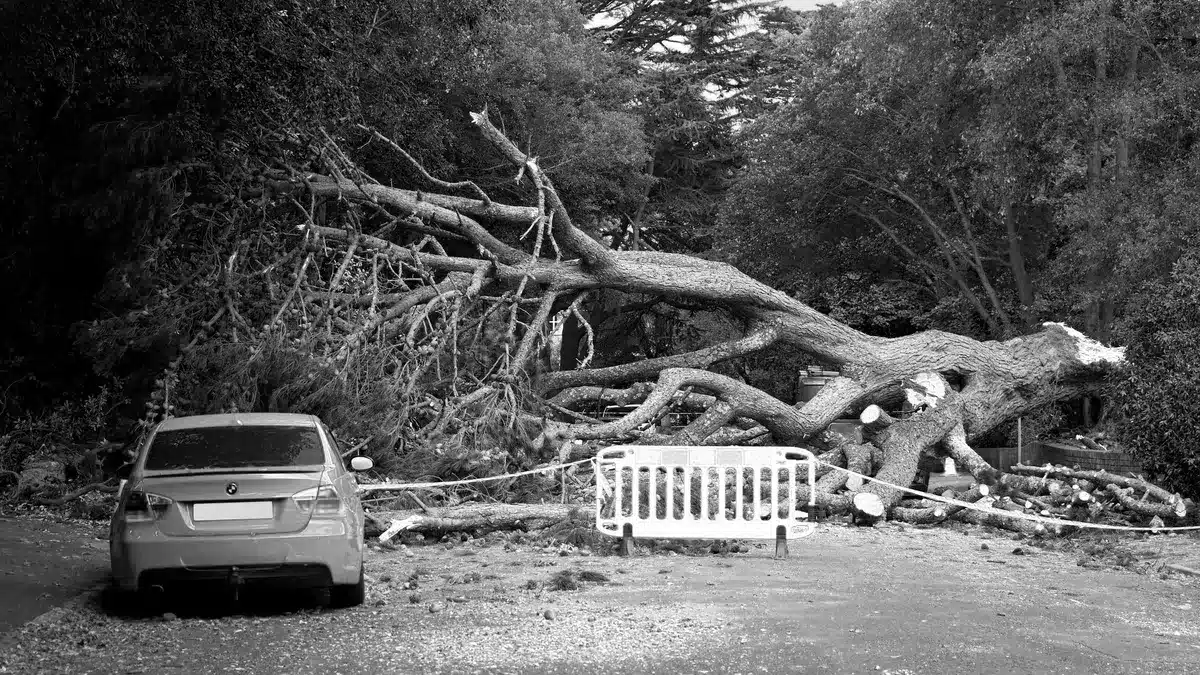
Examining a Fallen Tree or Branch
Visible deterioration or a prior report may help establish that a danger could reasonably have been recognized. The significance of a particular condition should be evaluated by a qualified person. A lawyer should not diagnose a tree from a photograph alone.
An arborist may examine the break and the surrounding structure to assess the failure. Photographs taken before removal can be useful, particularly when they show the whole tree as well as the damaged area. Safety comes first, especially around unstable limbs or power lines.
The duty of care depends on the setting and applicable law. A tree over a busy customer route can present a different factual context from a tree in a remote unused area. I would identify the relevant duty rather than suggest that every owner must predict every hidden internal defect.
Identifying Ownership and Maintenance Responsibility
The place where a branch lands does not necessarily establish who controlled it before the fall. The trunk may be on another parcel, or maintenance may have been assigned by agreement. Property records and a survey can help resolve the location when necessary.
A landlord, association or contractor may have undertaken particular maintenance work. I would examine those arrangements and what was actually performed. A utility’s trimming activity may also require review if the evidence connects it to the failure.
Each participant’s role should be established from facts. A company that worked somewhere nearby is not automatically responsible. The inquiry is whether it had a relevant duty and whether its conduct contributed to the injury.
Considering Weather Without Ending the Inquiry There
Severe weather may cause a tree failure that reasonable care would not have prevented. It can also expose an existing condition that should have received attention. The weather and maintenance evidence need to be compared before reaching a conclusion.
Official weather information can help establish the conditions around the event. The nearest reporting station may not reproduce every gust at the property, so an expert may need to explain the limits. A general description of a storm is less useful than a careful account of the conditions and timing.
The response to earlier warnings can also matter. If a branch had previously fallen or a specific concern had been reported, I would investigate what action followed. The purpose is to establish the information available before the injury, not judge the event only with hindsight.
Preserving Evidence of a Fallen Tree or Branch
Cleanup may be necessary to make an area safe. That should not require an injured person to interfere with emergency work. If photographs can be obtained safely, they may help preserve the condition before the material is removed.
I would consider whether relevant parts of the tree can be preserved through an appropriate request and whether an expert inspection is warranted. The practical steps depend on the location and who controls the material. A focused request can identify what is important without making unrealistic demands about an entire property.
Prior photographs or maintenance correspondence may also help. A neighbor may have an image showing the tree before the event. The value of that image depends on its date and what it actually depicts. We should keep those details clear when using it to support the history.
Addressing Public Trees and Insurance
A tree along a road may involve a public entity as well as an adjacent owner. Public claims can raise Tort Claims Act requirements and immunities. An adult’s claim generally has a 90-day formal notice issue, subject to statutory rules and exceptions, so the legal identities should be reviewed promptly.
Private liability coverage may depend on property ownership and the work performed. A contractor’s policy may raise different questions from a homeowners policy. I would investigate the applicable documents rather than assume the only relevant insurer is the one covering the place where the branch landed.
Medical or property benefits may address particular losses while responsibility is investigated. Those payments do not necessarily settle the personal injury claim. The different coverages and any reimbursement issues should be explained before a release is signed.
Questions About a Fallen Tree or Branch
What if the owner says the tree looked healthy?
That statement is part of the evidence. I would compare it with available photographs, inspection history and qualified analysis. The issue is what reasonable care required and what could have been recognized in the actual setting.
Can I ask for help after the tree has been removed?
Yes. Removal may limit an inspection, but other records may remain. We can discuss what was photographed, who responded and what maintenance information may be available. You do not need to resolve the cause of failure yourself before contacting us.
What information helps at the first conversation?
The location, date and a description of the injury are useful starting points. Bring any photographs or report numbers you have. I can help identify the additional records needed to evaluate the claim.
Sources and Further Reading
About Michael B. Fusco
I am Michael B. Fusco, a New Jersey personal injury lawyer Certified by the Supreme Court of New Jersey as a Civil Trial Attorney. I help injured people understand their options and develop the evidence needed to present their claims. My approach is to explain what we know, identify what still needs investigation and keep you informed as the case develops.
Discuss Your Injury With Mike
If you were injured and have questions about the circumstances discussed here, I am happy to talk with you. We can review the information you have and discuss what further investigation may help. Call 732-465-8733 or contact Fusco Law for a free personal injury consultation.
General Information
This article provides general information, not legal advice. The law’s application depends on the facts of the particular matter. Contacting Fusco Law does not establish an attorney-client relationship; representation begins only after a written agreement.