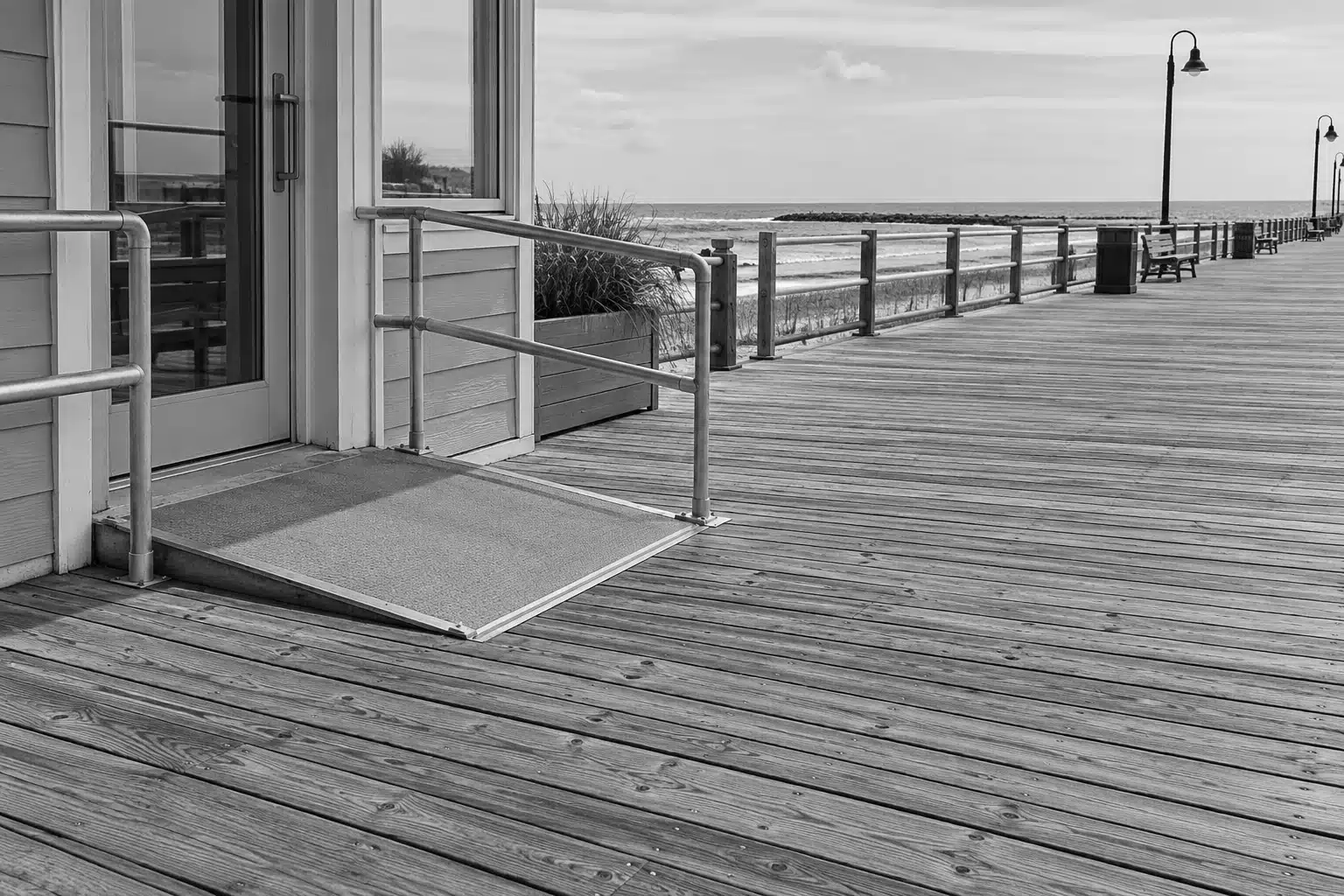
A boardwalk fall calls for a closer look at the location
A boardwalk fall can occur on a public walking surface, at a private store entrance or on a ramp serving a restaurant. Those places may be only a few feet apart, but the responsibility for their condition can be different. The first step is to identify the precise location and what caused the fall.
The place where you fell deserves a careful investigation, including who controlled it and what could have made it safer. I would not want a client to assume that every injury near a boardwalk is governed by the same rule or that the name of the town answers every question.
This discussion focuses on private businesses and the areas they control. Public property requires a separate legal analysis and prompt attention to different notice requirements. That distinction should be identified early, not discovered after evidence or a deadline has been lost.

Identify the surface your foot actually encountered
A photograph of the general boardwalk may establish where you were visiting. It may not show the raised threshold, displaced mat or uneven transition that caused you to lose your footing. The useful evidence connects the condition to the path you were taking.
If you can safely identify the location, explain which entrance you were using and the direction you were walking. Wider photographs can show the approach. Closer photographs may document a height difference or a damaged edge. Keep the originals and avoid adding measurements or descriptions that you cannot support.
People often remember the impact more clearly than the instant before it. That is understandable. You should describe what you remember without filling in the missing moment. A witness or recording may help determine whether your shoe caught an edge or whether another condition contributed.
Private businesses have responsibilities to their visitors
New Jersey premises law generally requires a business to exercise reasonable care for the safety of its customers. The inquiry can include inspection and correction of dangerous conditions within the scope of the business's responsibility. A property owner and tenant may have different roles, so the operating and maintenance arrangements can matter.
For a condition created by someone else, whether the responsible party knew or should have known of it is often important. An inspection record or an earlier complaint may help address that issue. A condition that appeared moments before the fall presents a different factual question from a deteriorating entrance that had been reported repeatedly.
We should not assume that a business had notice merely because an accident happened. Nor should we accept a denial of knowledge without considering the records. The investigation should examine the condition's history and the reasonable opportunities to discover or correct it.
The business name may not identify the responsible party
A restaurant may lease space from a separate owner. Another company may install a temporary ramp or maintain an entrance. A vendor may place equipment on the route customers are expected to use. Those arrangements can affect who had control over the particular hazard.
Responsibility cannot be determined simply by collecting the names of every business nearby. We need a connection between a party's duty, its conduct and the injury. Contracts, maintenance records and testimony can help establish that connection.
The same investigation may identify relevant insurance. Insurance is important to the practical evaluation of a claim, but the existence of a policy does not establish fault. Liability and coverage should each be evaluated on their own terms.
A busy setting provides context
Boardwalks are places where people naturally look toward entrances, signs and other visitors. The layout may affect what a pedestrian can see and the route available to reach a business. Lighting and temporary displays can also change how an entrance is approached.
Those circumstances should be documented fairly. They are not a substitute for identifying a dangerous condition. They may help explain why the condition was difficult to appreciate or why a visitor used the particular route.
If the defense claims you should have seen the hazard, that is a question to evaluate with the evidence. It should not end the discussion before the approach, visibility and condition have been examined. New Jersey's comparative-fault principles require a fact-specific analysis rather than an automatic conclusion from the fact of a fall.
Preserve the evidence and prioritize care
Report the incident to the business and keep any written response. Obtain appropriate medical attention and describe how the fall happened. If someone with you took photographs or spoke with an employee, preserve that information while the details remain fresh.
A lawyer can request relevant video and maintenance records before they become harder to locate. Do not return to an unsafe location or attempt to recreate the fall. If a repair occurs later, document what you know without treating the repair itself as an admission; evidence rules limit how subsequent repairs may be used.
If the location is publicly owned, contact counsel promptly. New Jersey public-entity claims commonly involve a 90-day notice requirement, with limited exceptions, as well as separate liability rules. The right response is a timely review of ownership and deadlines, not guessing from the appearance of the property.
The injury must be evaluated beyond the initial report
A fall that initially seems manageable can interfere with work or normal activities as the condition develops. Tell your providers about those changes. The medical record should explain the course of treatment and any continuing limitations.
Your claim deserves an evaluation based on the actual condition, the responsible parties and the medical evidence. A careful investigation can turn an uncertain account of a fall into a clearer explanation of what happened and what assistance may be available.
Sources and Further Reading
About Michael B. Fusco
Michael B. Fusco is a New Jersey personal injury attorney certified by the Supreme Court of New Jersey as a Civil Trial Attorney. Read Mike’s biography and credentials.
Discuss Your Personal Injury Questions
If you have questions about an injury in New Jersey, I am happy to discuss what happened and the options the facts may support. You do not need to have every document or answer before contacting us. Call 732-465-8733 or contact Fusco Law for a free personal injury consultation.
General Information
This article provides general information, not legal advice for a particular situation. Laws and policy terms must be applied to the actual facts. Reading this article or contacting the firm does not, by itself, create an attorney-client relationship.