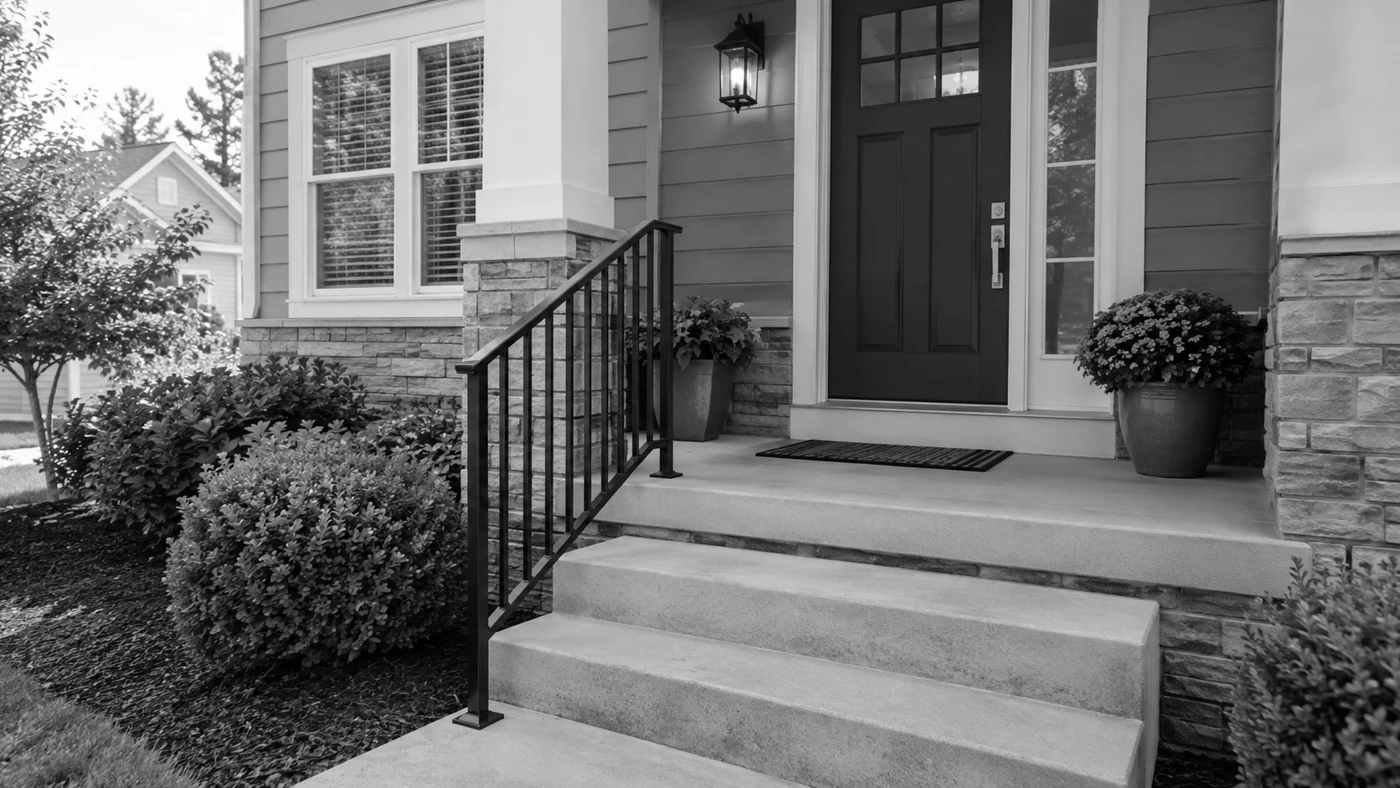
An unsafe walkway can change a visit in an instant
An unsafe walkway at a hotel or shore rental may involve a damaged step, inadequate lighting or an uneven transition between surfaces. Determining responsibility starts with identifying the condition that caused the injury and who controlled the area. The fact that the property was being rented does not answer those questions by itself.
A guest's injury deserves an investigation of the walking route as it actually existed, not just how the property was supposed to be maintained. I would want to understand where you were going and why that was the route available to you.
Hotels, private rental owners and management companies may have different responsibilities. Those relationships need to be examined alongside the physical evidence. A booking platform's involvement should not be confused with proof that it maintained the walkway.
Describe the approach and the condition
If you can safely identify the location, preserve photographs that show both the condition and the approach. A close-up may show a broken edge. A wider view may explain the lighting, the entrance being used and whether another route was apparent.
Time matters. A photograph taken in bright daylight may not show what a guest could see at night. If the conditions changed before photographs were taken, be clear about that. Evidence remains useful when its limitations are explained honestly.
Your account should distinguish what you observed from what you later learned. You may know that your foot caught at a particular place without knowing how long the condition existed. That second question can be investigated through records and witnesses.
Control and maintenance arrangements matter
A hotel may use a separate maintenance contractor. A rental owner may hire a management company to handle inspections and repairs. The agreement can help identify the work each party undertook, although the legal duty is not always resolved by a contract label alone.
We should also examine what actually happened in practice. Who received complaints? Who arranged repairs? Who had access to the area? Those facts may clarify responsibility when the written arrangements are incomplete or disputed.
The purpose is to identify the party whose duty and conduct relate to the hazard. Naming every company associated with a reservation is not a substitute for that investigation. A focused claim is stronger when the evidence explains each party's role.
Notice is often an important part of the case
Where a dangerous condition was created by someone other than the responsible party, a premises claim often requires attention to whether that party knew or should have known of it. Prior messages, inspection records or a condition's physical characteristics may be relevant.
An earlier guest's report of the same broken step may raise different issues from a temporary condition that arose immediately before an accident. We should obtain the available history rather than assume either situation. The applicable legal rules also depend on the type of property and the visitor's status.
If a business says no one complained, that is one piece of information to examine. It does not necessarily answer whether a reasonable inspection should have revealed the condition. Conversely, the existence of an accident does not establish that an inspection was inadequate.
Preserve the reservation and your communications
Keep the booking confirmation, access instructions and messages with the host or hotel. Instructions directing you to a side entrance may explain why you used a particular walkway. A report you made about the condition may establish when the operator was informed.
Save complete conversations where possible. A cropped screenshot can omit the date or the message that explains the response. Original files and ordinary account exports can help preserve context, provided you access only information you are authorized to obtain.
A listing may change after the stay. Preserve relevant descriptions and photographs available to you. They may help identify the property and its advertised access arrangements, although they do not necessarily show its condition at the precise time of the injury.
Report the incident and seek appropriate care
Notify the operator and keep the report or response provided. Be factual about what happened. If you are unsure about a detail, say so. An incident report should not become an argument over every legal issue while you are trying to obtain medical assistance.
Tell your providers how you were hurt and follow their advice. If you return home and continue treatment elsewhere, keep track of both sets of providers. Travel can separate the initial records from later care, and the medical evaluation should consider the entire course.
If financial or transportation difficulties interfere with treatment, let your lawyer and provider know. Those practical barriers should be addressed rather than left as unexplained gaps in the history.
A later repair does not replace evidence of the original condition
A property may be repaired before counsel can inspect it. Preserve photographs and note when you learned of the change. Do not interfere with necessary safety work or attempt to recreate the hazard.
Evidence rules limit the use of subsequent repairs to prove negligence. The investigation should therefore focus on establishing the original condition through reliable sources, rather than treating a repair as an automatic admission of responsibility.
Review the claim before assuming the answer
An unsafe walkway claim requires proof of a duty, a breach and a connection to the injury. Medical evidence must also establish the harm and its consequences. Those questions can be evaluated together as records become available.
You do not need to know which maintenance company was responsible before asking for advice. Identifying that information is part of the work a lawyer can undertake to give you a more informed assessment of your options.
Sources and Further Reading
About Michael B. Fusco
Michael B. Fusco is a New Jersey personal injury attorney certified by the Supreme Court of New Jersey as a Civil Trial Attorney. Read Mike’s biography and credentials.
Discuss Your Personal Injury Questions
If you have questions about an injury in New Jersey, I am happy to discuss what happened and the options the facts may support. You do not need to have every document or answer before contacting us. Call 732-465-8733 or contact Fusco Law for a free personal injury consultation.
General Information
This article provides general information, not legal advice for a particular situation. Laws and policy terms must be applied to the actual facts. Reading this article or contacting the firm does not, by itself, create an attorney-client relationship.