Mike’s Quick Answer
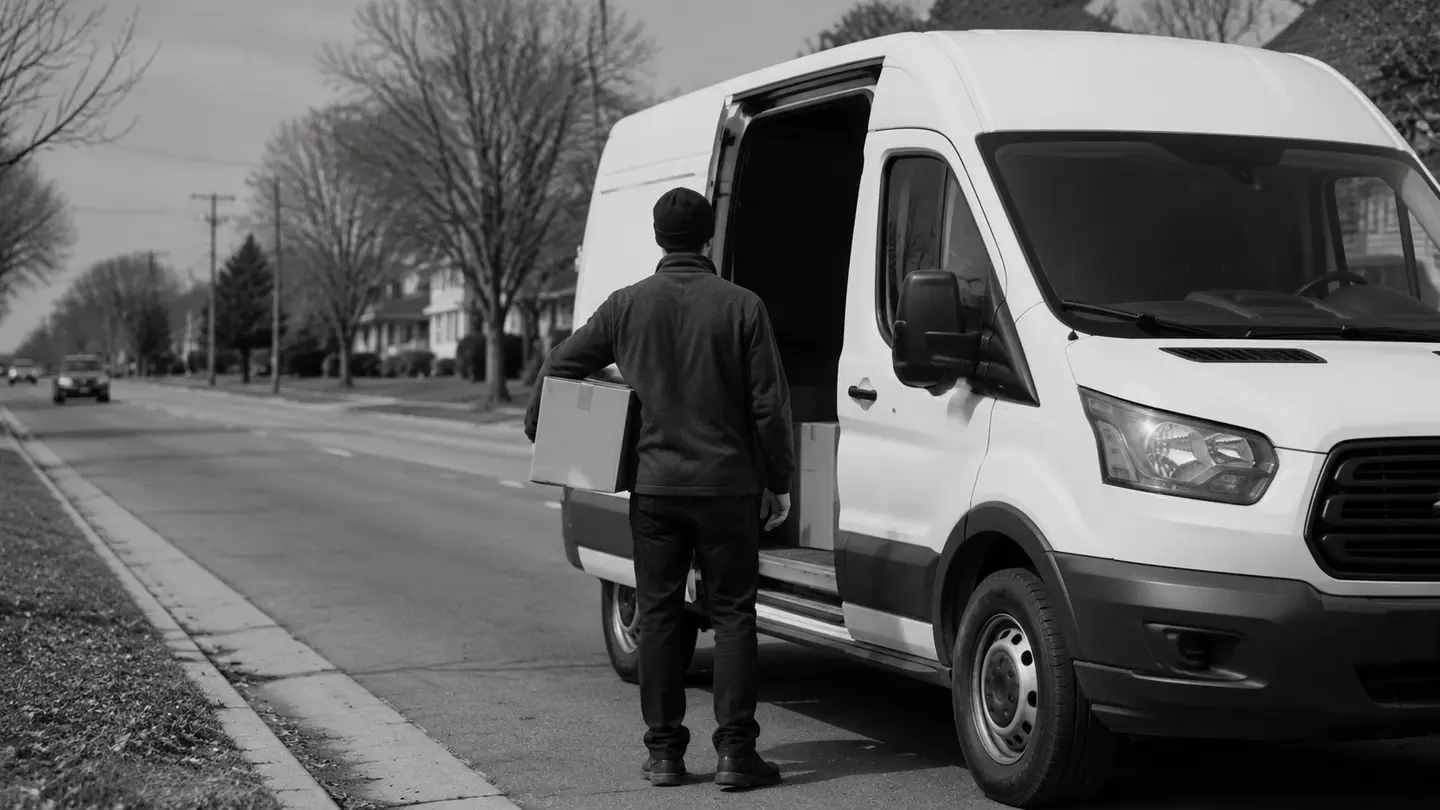
A delivery driver crash may involve responsibility beyond the person behind the wheel. An employer or another business may have a legally significant role in the work. The investigation should examine the collision and the delivery operation together so that a supported claim is directed to the appropriate parties.
I follow the delivery records and business relationships to identify the parties and coverage that may support your recovery. A logo can provide a lead, but the contracts and actual working arrangement help explain who controlled the assignment. You do not need to know those relationships before contacting my office.
Establishing How the Delivery Driver Crash Happened
I would begin with the driver’s approach and the event itself. An unsafe turn presents a different factual issue from a vehicle stopped where it obstructed a crossing. Video, witness accounts and physical evidence can help establish what happened before impact.
The delivery assignment may provide context. A dispatch message can help explain why the vehicle entered a particular location. It does not automatically prove distraction or negligence. I would compare it with the timing and other evidence before drawing that conclusion.
Your account is an important starting point. Describe what you observed and distinguish it from anything learned afterward. If the crash happened too quickly to remember every movement, that is understandable. Part of the investigation is identifying independent records that can fill the gaps.
Examining the Employer or Principal’s Role
An employer may be responsible for an employee’s negligence committed within the scope of employment. That principle, often called respondeat superior, requires examination of the relationship and the connection between the conduct and the assigned work.
A company may also have responsibility for its own conduct, such as a supported failure in vehicle maintenance. That is different from being legally responsible for the driver’s negligence. I would identify the theory that fits the evidence and the records needed to establish it.
A written independent-contractor label does not answer every agency question. The right to control the work can be important. The applicable tort principles must be distinguished from the tests used for wage claims or workers’ compensation. One classification rule should not be substituted for another without legal analysis.
Tracing an Operation With Several Companies
A retailer may use a regional delivery company that obtains drivers through another business. The public-facing brand may be only one part of the arrangement. Contracts and operating records can help identify the responsibilities of each participant.
I would ask who assigned the delivery and who could direct how it was performed. The company that maintained the vehicle may be different from the company handling customer orders. Each relationship matters only to the extent it supports a relevant duty or coverage question.
The actual operation should be compared with the written agreements. A brief contract description may not capture detailed dispatch instructions or supervision. The investigation should establish what happened in practice rather than stop at the document’s heading.
Reviewing Vehicle Ownership and Insurance
A driver may use a company van or a personal car. That difference can affect insurance without eliminating the need to examine the business relationship. Ownership alone is not proof of negligence, but it can help identify maintenance duties and applicable policies.
Commercial or app-based coverage may apply to a particular assignment. A personal policy may raise a business-use exclusion. I would obtain the written coverage position and the relevant policy language instead of accept a general statement that the driver was using the wrong kind of insurance.
The status of a delivery order can also matter. An accepted assignment may be treated differently from personal travel after the work has ended. The records should establish what the driver was doing at the time of impact. A denial by one carrier is a reason to review the available coverage carefully, not assume the investigation is finished.
Preserving Delivery Driver Crash Records
Delivery scans and dispatch messages may show where the driver was sent. A fleet system may hold relevant vehicle information. The records available depend on the equipment and operation; not every delivery car has the same recording capability.
I would identify the driver and assignment as precisely as possible in a preservation request. Multiple companies may hold different pieces of the history. Appropriate requests can protect those records while the legal relationships are being confirmed.
Electronic information needs careful interpretation. A timestamp may not align perfectly with another system’s clock. A route instruction does not prove the driver followed it. Comparing the records with video and physical evidence helps build a dependable sequence rather than an unsupported technical narrative.
Presenting the Injury’s Full Effect
The business investigation should support the client’s claim, not overshadow the injury. I would review the medical history and discuss how recovery has affected ordinary responsibilities. Relevant employment records may help establish missed earnings, while medical evidence addresses ongoing limitations.
The assessment develops as the evidence becomes clearer. I would explain what is known and what still needs to be obtained before making a settlement recommendation. The client deserves a reasoned explanation of both responsibility and the losses being pursued.
Questions About a Delivery Driver Crash
What if the package company says it does not employ the driver?
We should examine the actual relationship and the legal basis for any potential claim. That statement may identify a contractor we need to investigate. It should be considered with the records rather than treated as the final answer to every responsibility question.
Can you review the case if the driver used a personal car?
Yes. A personal car may still have been used for a work assignment. The agency and insurance questions require a factual review, which can begin with the police report and the information available about the delivery.
Sources and Further Reading
About Michael B. Fusco
I am Michael B. Fusco, a New Jersey personal injury lawyer Certified by the Supreme Court of New Jersey as a Civil Trial Attorney. I help injured people understand their options and develop the evidence needed to present their claims. My approach is to explain what we know, identify what still needs investigation and keep you informed as the case develops.
Discuss Your Injury With Mike
If you were injured in a delivery driver crash, I am happy to discuss how we can investigate responsibility and available coverage. We can review the information you have and discuss what further investigation may help. Call 732-465-8733 or contact Fusco Law for a free personal injury consultation.
General Information
This article provides general information, not legal advice. The law’s application depends on the facts of the particular matter. Contacting Fusco Law does not establish an attorney-client relationship; representation begins only after a written agreement.