
Urgent care records can document the beginning of an injury
Urgent care records may provide the first medical account after a weekend injury. They can help establish when you sought treatment and what you reported at that visit. I would read them as part of a developing medical history, not as a complete prediction of how you will recover.
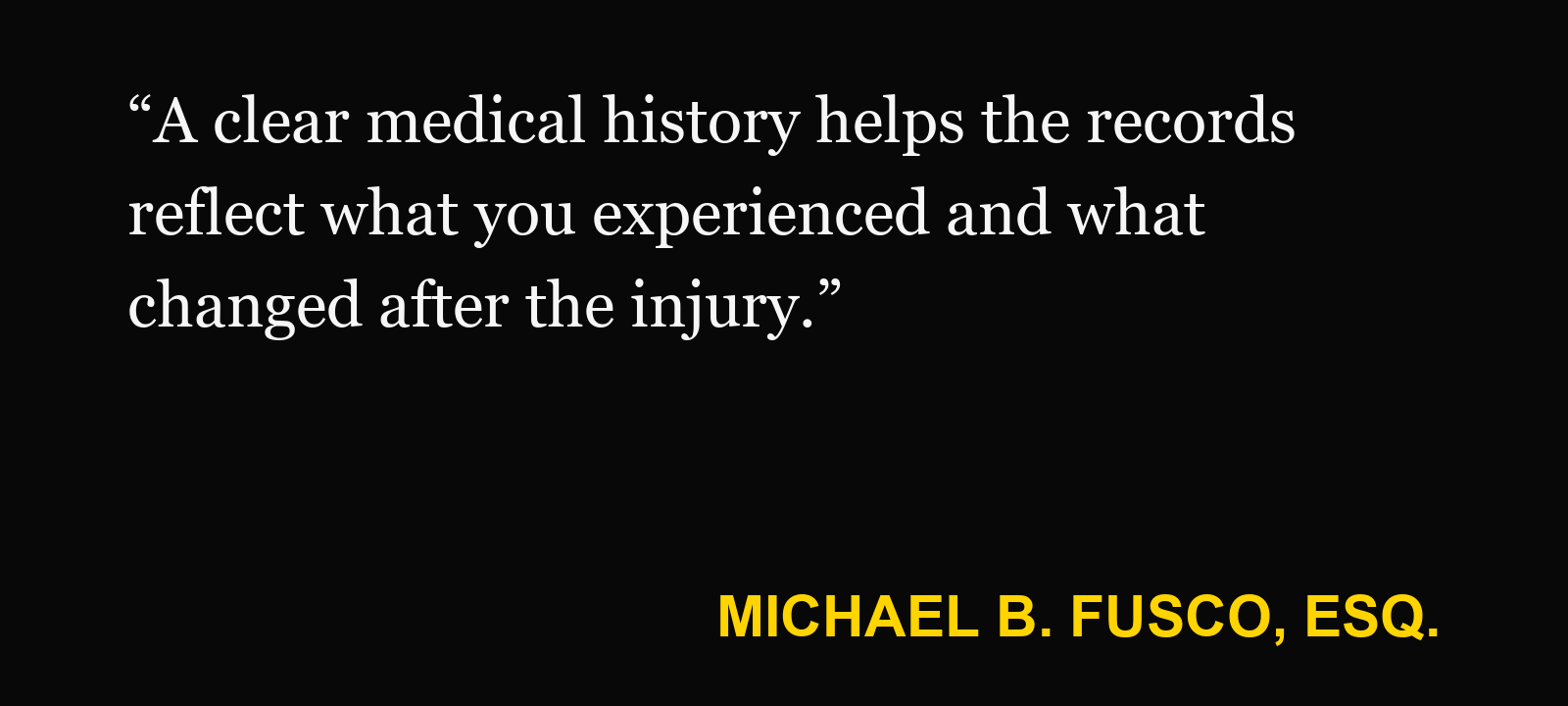
A clear medical history helps the records reflect what you experienced and what changed after the injury. Tell the clinician how the event happened and describe the symptoms that brought you in. If something developed later, explain that at the appropriate follow-up rather than trying to make the first note account for information no one had yet.
Where to seek care is a medical decision. An injury claim should not drive someone toward a particular facility or cause them to delay needed emergency evaluation. Follow professional guidance about the level of care your condition requires.
Understand the purpose of the initial visit
An initial evaluation addresses the symptoms and concerns presented at that time. The clinician may assess whether further testing or another setting is needed. The resulting note reflects that encounter, including its scope and the information available then.
The legal review should respect those limits. A note addressing the most urgent complaint may not discuss every later limitation in detail. That is a reason to understand the sequence of care, not to assume that the provider ignored a problem or that a later symptom must be unrelated.
I would compare the initial record with the subsequent history. When did a symptom become apparent? What did the patient report at the next visit? What did the treating professionals conclude? The sequence provides more useful information than isolating a single phrase.
Give concrete descriptions rather than legal conclusions
Describe the event in terms you know. If a vehicle struck your car from behind, say that. If you fell but did not initially see the substance on the floor, explain what you observed and when. The clinician does not need a conclusion about legal fault to document the mechanism.
For symptoms, explain location and function as accurately as you can. Saying that turning your head has become difficult may communicate something different from a general statement that you feel sore. Neither requires you to diagnose yourself or predict a permanent limitation.
Earlier health information is also relevant. If the same area bothered you before, describe its condition before this event and the change afterward. A complete history helps distinguish a new injury or aggravation from an assumption based only on an old diagnosis.
Keep the records and follow-up instructions together
Retain the discharge paperwork and any instructions about further evaluation. A patient-portal summary can be useful, but it may not contain the entire clinical record. Counsel may need the complete note and associated reports to understand what happened during the encounter.
If a referral is made, follow up with the treating office about how it should be arranged. Let the office know about an access or scheduling problem. The legal significance of a delay is easier to evaluate when the actual circumstances are documented.
Your lawyer should not prescribe treatment or tell you to attend visits solely to create records. The role of counsel is to understand the care and address claim-related obstacles, while the treating professionals determine the medical plan.
Address factual errors through the proper process
If you notice an incorrect date or a history that does not reflect what you reported, raise the concern with the provider. Be specific about the item and why you believe it is inaccurate. A request to clarify an error is different from asking someone to change a medical opinion to support a case.
Federal privacy rules provide a process for requesting an amendment to covered medical records. A provider may deny a request under the applicable rules, and a patient may have the opportunity to submit a statement of disagreement. Counsel can help identify what record is needed without substituting for the provider's clinical judgment.
Keep the original record and the response to the request. The sequence of correction or clarification should remain transparent. Editing your own downloaded copy is not the same as obtaining an amendment to the provider's record.
Evaluate the injury as the medical picture develops
An early diagnosis may change as further information becomes available. That is why a responsible case evaluation considers the course of care and the effect on the person's life. The first weekend visit is an important piece of the history, but it is not every piece.
Tell counsel if your work duties or daily activities have changed because of the injury. Describe the particular difficulty and its timing. A measured account of what you can and cannot comfortably do is more useful than treating every day as identical.
The purpose of reviewing urgent care records is to build an accurate account from the beginning. When the initial note is placed alongside follow-up care and the surrounding evidence, it can help explain the injury fairly and support an informed discussion of the claim.
Sources and Further Reading
About Michael B. Fusco
Michael B. Fusco is a New Jersey personal injury attorney certified by the Supreme Court of New Jersey as a Civil Trial Attorney. Read Mike’s biography and credentials.
Discuss Your Personal Injury Questions
If you have questions about an injury in New Jersey, I am happy to discuss what happened and the options the facts may support. You do not need to have every document or answer before contacting us. Call 732-465-8733 or contact Fusco Law for a free personal injury consultation.
General Information
This article provides general information, not legal advice for a particular situation. Laws and policy terms must be applied to the actual facts. Reading this article or contacting the firm does not, by itself, create an attorney-client relationship.