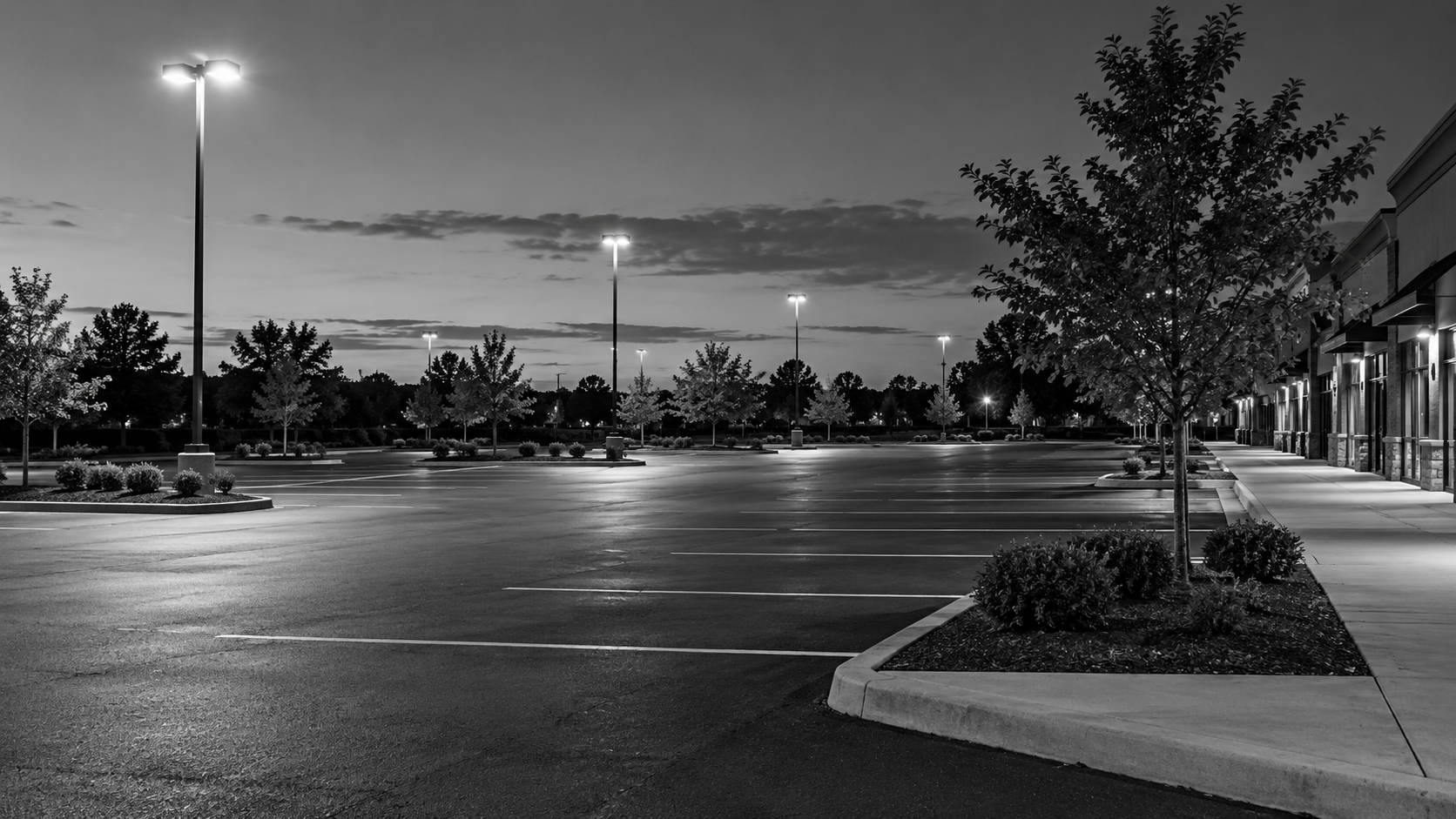
When can poor parking-lot lighting support a claim?
Poor parking-lot lighting can support an injury claim when a responsible party failed to use reasonable care and that failure contributed to what happened. Darkness alone is not enough. I would want to understand what you could not see and why that mattered to the injury.
For example, a curb hidden in shadow raises a different issue from a fall in a well-lit part of the same lot. We need to connect the condition to the particular incident. A general description that the entire property was dark may not answer that question.
What should the parking-lot lighting investigation examine?
A photograph of one burned-out fixture does not show the full lighting conditions. Nearby fixtures may illuminate the area, or a working fixture may cast a shadow across the route people use. The investigation needs to address the pedestrian’s view at the relevant location.
The time matters as well. A daytime inspection may establish the layout without showing what was visible after dark. Photographs taken under reasonably similar conditions can help, but camera exposure may make a scene look brighter or darker than it appeared to a person.
When appropriate, an expert can measure illumination and evaluate the applicable standards. The goal is not simply to produce a low light reading. It is to understand whether the condition made the expected use of that area unreasonably dangerous.
Who had responsibility for inspection and repair?
In a shopping center, the landlord may maintain common parking areas while a tenant handles its own entrance. A maintenance company may be assigned to inspect fixtures or respond to outages. I would review those arrangements and what the parties actually did.
An electrical contractor’s presence at the property does not by itself establish responsibility for every light. Its work and duties need to be connected to the fixture or system involved. The owner may also retain obligations despite using a contractor.
Repair records can be particularly helpful. They may show when a problem was reported and how it was addressed. A maintenance invoice is evidence of work, but we still need to know whether it concerns the same area and whether it predates the injury.
Did anyone know about the problem?
For a lighting failure that developed over time, prior complaints or inspection records may help show that a responsible party knew or should have known about it. A recent failure with no reasonable opportunity to discover it presents a different question.
That distinction is important. Reasonable care does not mean a property owner guarantees that every fixture works at every moment. On the other hand, leaving an established visibility problem unaddressed may support a claim when it causes an injury.
If the responsible party created the dangerous condition, the notice analysis may differ. I would evaluate that possibility rather than automatically require a previous customer complaint in every parking-lot lighting case.
What if I already knew the lot was dark?
Knowing that a lot was dark does not automatically resolve responsibility. The route available to you and the reason you were using it still matter. An insurer may raise comparative fault, but any proposed allocation should be evaluated against the actual circumstances.
Describe what happened as accurately as you can. There is no need to fill gaps in your memory or claim that you saw a defect you only discovered afterward. A witness or recording may help explain what you could not observe yourself.
Get appropriate medical care and preserve any incident report. If photographs can be taken safely, include the surrounding route and identify when they were taken. Publicly owned lots can involve additional statutory requirements and short notice deadlines, so the ownership question should be addressed promptly. The investigation should establish both the lighting failure and its connection to your injury before a conclusion is drawn.
Sources and further reading
Discuss your personal injury questions
If you have questions about a New Jersey personal injury matter, I am happy to discuss what happened and help you understand the next steps. Contact Fusco Law or call 732-INJURED (732-465-8733).
This article is general information, not legal advice. Reading it or contacting the firm does not, by itself, create an attorney-client relationship.