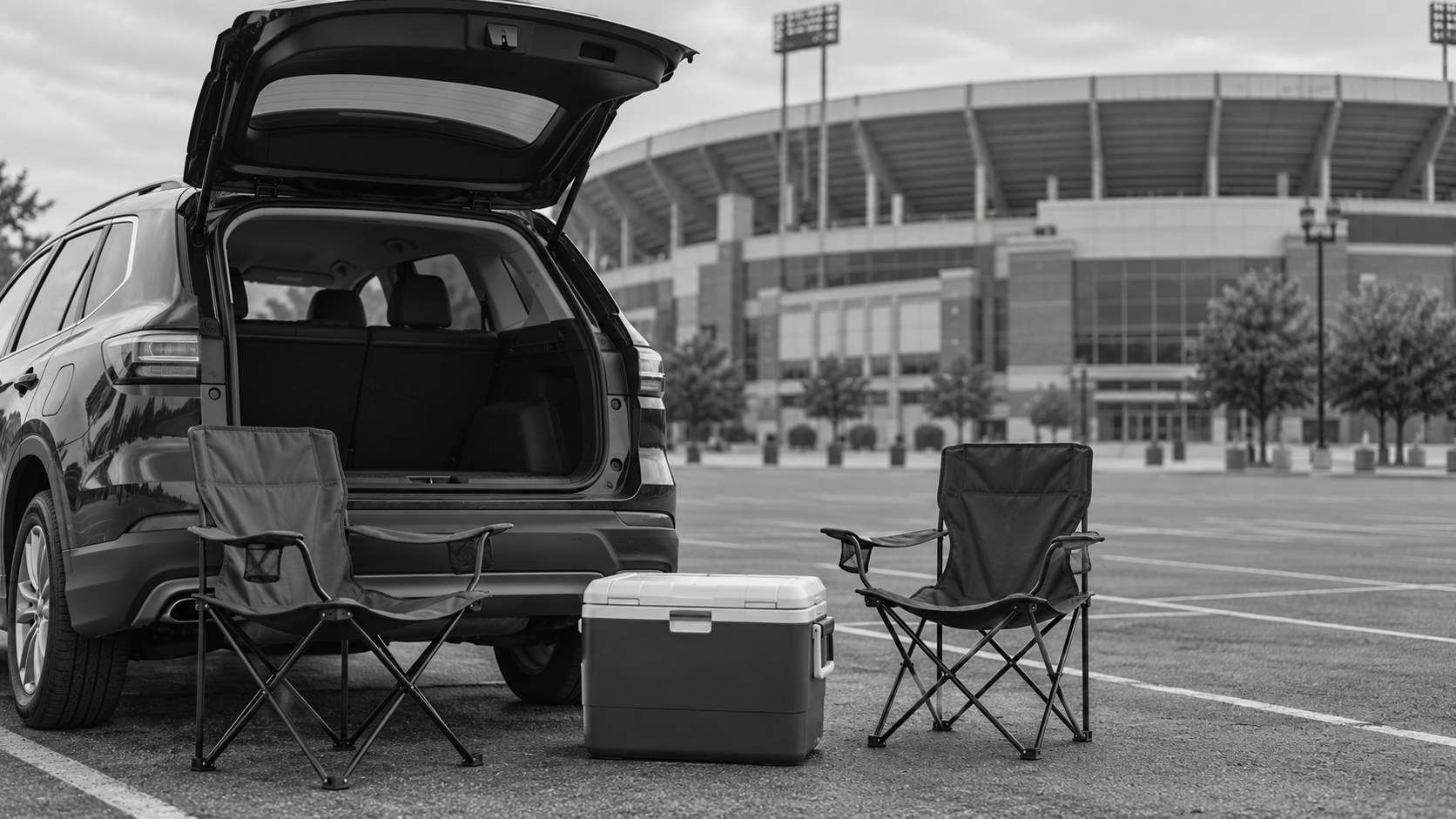
Why does the location outside the stadium matter?
Tailgating-lot injuries can involve a different property owner and a different set of responsibilities from an injury inside the stadium. The stadium’s name on your ticket does not necessarily tell us who operated the parking area. I would start with the precise place where the injury happened and what caused it.
A fall over a broken parking surface presents a different claim from being struck by a moving vehicle. Calling both incidents a stadium accident can obscure that distinction. We need the facts before deciding whom to pursue.
Who was responsible for the tailgating-lot injuries?
Some lots belong to the venue. Others are operated separately, even if attendants direct event traffic into them. Keep the parking receipt and any instructions you received. They may help identify the operator, although the name that collected the fee is not necessarily the only responsible party.
I would compare the property records with the operating arrangements. A contractor may handle traffic while a different company handles maintenance. What matters is the duty each party had and whether a failure to carry out that duty contributed to the injury.
If the property is publicly owned, a possible Tort Claims Act notice deadline needs attention early. A report to an event employee should not be treated as a substitute for formal notice to the proper public entity.
Was this a property condition or a temporary hazard?
An established defect in the pavement may have existed long enough to be discovered during a reasonable inspection. A cooler placed in a pedestrian route moments before a fall raises different questions. We would want to know who placed it there and whether the operator had a reasonable opportunity to address it.
For many conditions created by visitors, proof that the operator knew or should have known about the danger is important. When a responsible party created the condition itself, the analysis can be different. The mere fact that someone was hurt does not establish negligence.
Photographs should show the surrounding route as well as the object involved. A tightly cropped picture may make it difficult to understand where people were expected to walk. Save the original file and explain which direction you approached from.
What if a vehicle or another attendee caused the injury?
A driver must account for the pedestrians around the vehicle. A crowded event lot does not excuse unsafe driving. At the same time, the movement of both the vehicle and the injured person must be examined before assigning fault.
If another attendee created a hazard, that person’s conduct may be relevant without automatically making the venue responsible. Claims involving alcohol or security require additional facts and their own legal standards. I would not assume that the presence of alcohol proves improper service or that every unexpected incident should have been prevented.
New Jersey comparative-fault principles may also be raised. That does not mean an injured person should accept an insurer’s allocation of responsibility without reviewing the evidence supporting it.
What should be preserved after tailgating-lot injuries?
Get appropriate medical care first. When it can be done safely, identify the lot and parking row, report the incident and obtain the names of witnesses. A friend may be able to document the area if your injuries prevent you from doing so.
Temporary setups disappear quickly after an event. Video from a nearby vehicle or venue camera may also be overwritten. An early preservation request can identify the relevant location and time rather than asking generally for everything recorded that day.
Keep your own account factual. You do not need to decide who was negligent while you are still trying to understand your injury. What you remember about the route and the incident may be valuable even when the ownership arrangements remain unknown. Those arrangements are part of the investigation.
Sources and further reading
Discuss your personal injury questions
If you have questions about a New Jersey personal injury matter, I am happy to discuss what happened and help you understand the next steps. Contact Fusco Law or call 732-INJURED (732-465-8733).
This article is general information, not legal advice. Reading it or contacting the firm does not, by itself, create an attorney-client relationship.