How do you identify the responsible property owner?
After a fall or another injury on private property, identifying the responsible property owner is only part of the investigation. The person or company on the deed may not be the only party with responsibility for the area. A tenant may control the entrance. A management company may arrange inspections. A contractor may have performed the work that created the condition.
Finding who controlled the property is an important step toward holding the right party accountable. I begin with the exact location and what appears to have caused the injury. From there, the investigation can address ownership, control and the work each party agreed or undertook to perform. The name on a storefront does not necessarily answer those questions.
Pinpoint the area where the injury occurred
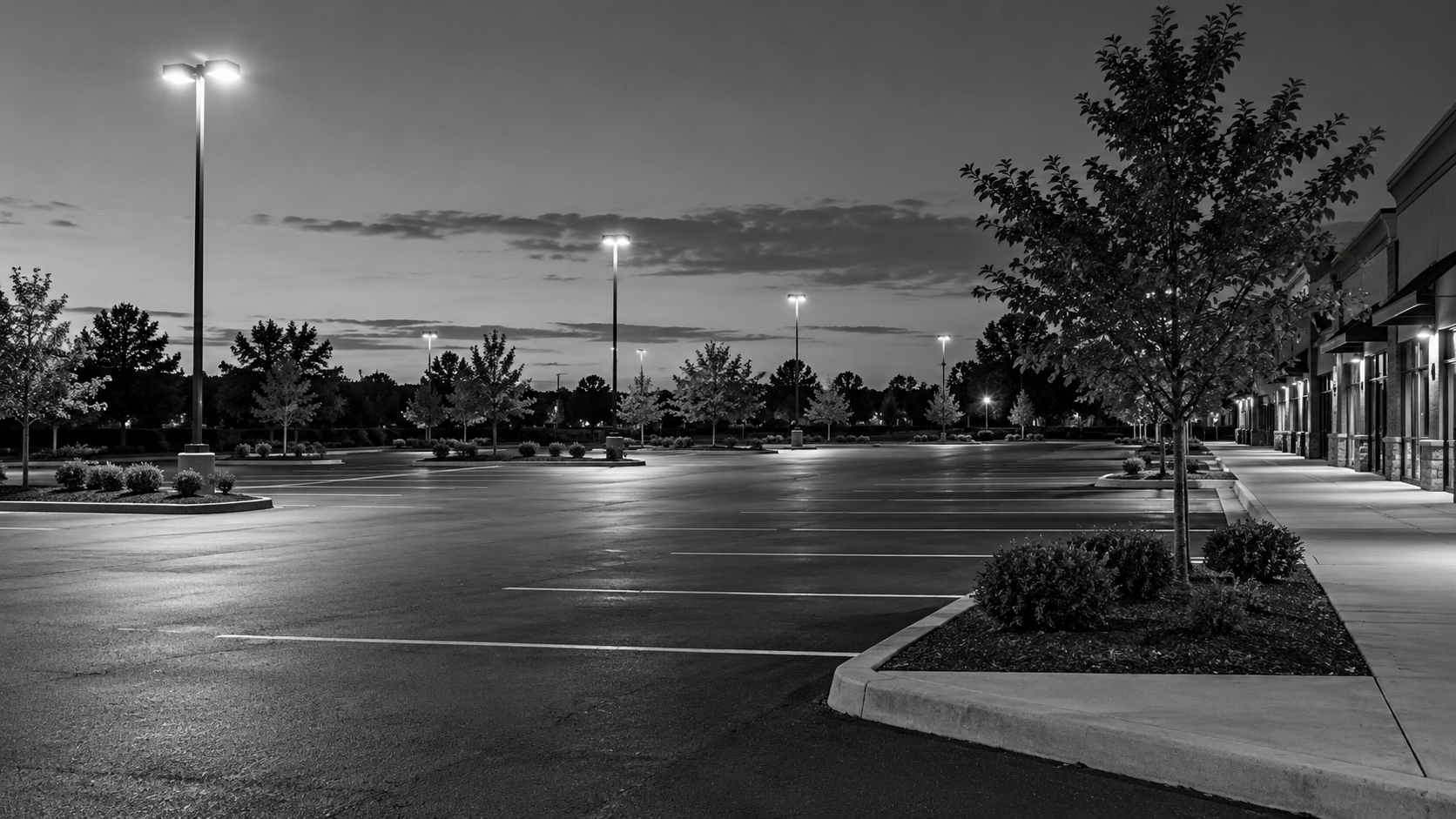
A shopping center can contain several different responsibility arrangements within a short distance. A store's interior may be controlled by its tenant, while a common walkway or parking area may be maintained by someone else. A delivery entrance may have separate access and maintenance arrangements.
Photographs and a clear description of the location help connect the event to the correct property. A street address may identify the overall complex without showing which doorway, stair or parking aisle was involved. If you have a receipt or an incident report, preserve it along with the original photographs.
Do not return to an unsafe area or enter restricted property to gather evidence. Existing photographs, witnesses and records can provide a starting point. If measurements or a technical inspection are needed, those can be considered through an appropriate investigation.
Ownership records provide a starting point
Public property records can help identify an owner, but they may show an entity name that is unfamiliar to a visitor. A building can be owned through a company whose name is different from the business operating there. The fact that two names differ does not by itself show that anything is improper.
I would verify the relevant ownership and then examine who occupied and controlled the premises at the time of the incident. A current record may need to be compared with the date of the injury if the property changed hands. Corporate records can assist with identification, but ownership of a company is not automatically personal responsibility for an accident.
This work is important before deciding whom to name in a lawsuit. A familiar brand, a local operator and a landlord may be separate entities. Their relationships need to be established rather than inferred from a sign or an internet listing.
Examine control and maintenance duties
A lease may explain who agreed to maintain a particular area. Management contracts and work orders may provide additional detail. Actual practice matters too: who inspected the walkway, responded to complaints or arranged repairs?
Those documents do not always resolve the injured person's rights on their own. Contractual allocation between businesses and the duties owed to a visitor are related but distinct questions. One party's agreement to reimburse another is also different from proving that it caused the injury.
New Jersey premises-liability law considers the circumstances and the applicable duty. The legal analysis may differ for a commercial visitor, a social guest or another entrant. I would examine the relationship and the nature of the hazard before assuming that every property case follows the same formula.
Connect the condition to a responsible party
Once the parties are identified, the next question is what the evidence shows about the condition. In many premises cases, proof that a defendant created the hazard or had actual or constructive notice is important. The existence of an injury does not eliminate the need to investigate that connection.
A maintenance request made before a fall may show actual knowledge. Evidence about how long a condition existed may support a different notice argument. Surveillance footage, inspection records and witness observations can help establish the timeline. Each has to be evaluated for what it actually proves.
A contractor's involvement should also be examined specifically. Performing work somewhere in the complex does not establish responsibility for every hazard there. The scope of the work and what occurred at the precise location are more useful than a general assumption that a contractor was involved.
Preserve options while the investigation develops
Businesses sometimes direct an injured person from one office to another. Keep those communications, but do not treat an informal statement that "the landlord handles that" as a complete legal answer. It may be accurate, incomplete or based on an employee's limited knowledge.
Your lawyer can seek records and evaluate the available parties through the claim and litigation process. Identifying a party later can create procedural difficulties, so early investigation matters. A placeholder name in a complaint is not a substitute for diligent efforts to find the proper defendant, and deadlines should be addressed promptly.
If the investigation reveals public ownership or involvement, additional rules and much shorter notice requirements may apply. That possibility should be checked early even when the location appears privately operated. It is a reason to verify the facts, not to assume every property claim involves the government.
The goal is a clear account of who controlled the area and how the unsafe condition arose or remained unaddressed. That gives the client a stronger foundation for pursuing the right parties. You do not need to solve the ownership structure yourself before seeking help with a property injury.
Sources and Further Reading
About Michael B. Fusco
Michael B. Fusco is a New Jersey personal injury attorney certified by the Supreme Court of New Jersey as a Civil Trial Attorney. Read Mike’s biography and credentials.
Discuss Your Personal Injury Questions
If you have questions about an injury in New Jersey, I am happy to discuss what happened and the options the facts may support. You do not need to have every document or answer before contacting us. Call 732-465-8733 or contact Fusco Law for a free personal injury consultation.
General Information
This article provides general information, not legal advice for a particular situation. Laws and policy terms must be applied to the actual facts. Reading this article or contacting the firm does not, by itself, create an attorney-client relationship.