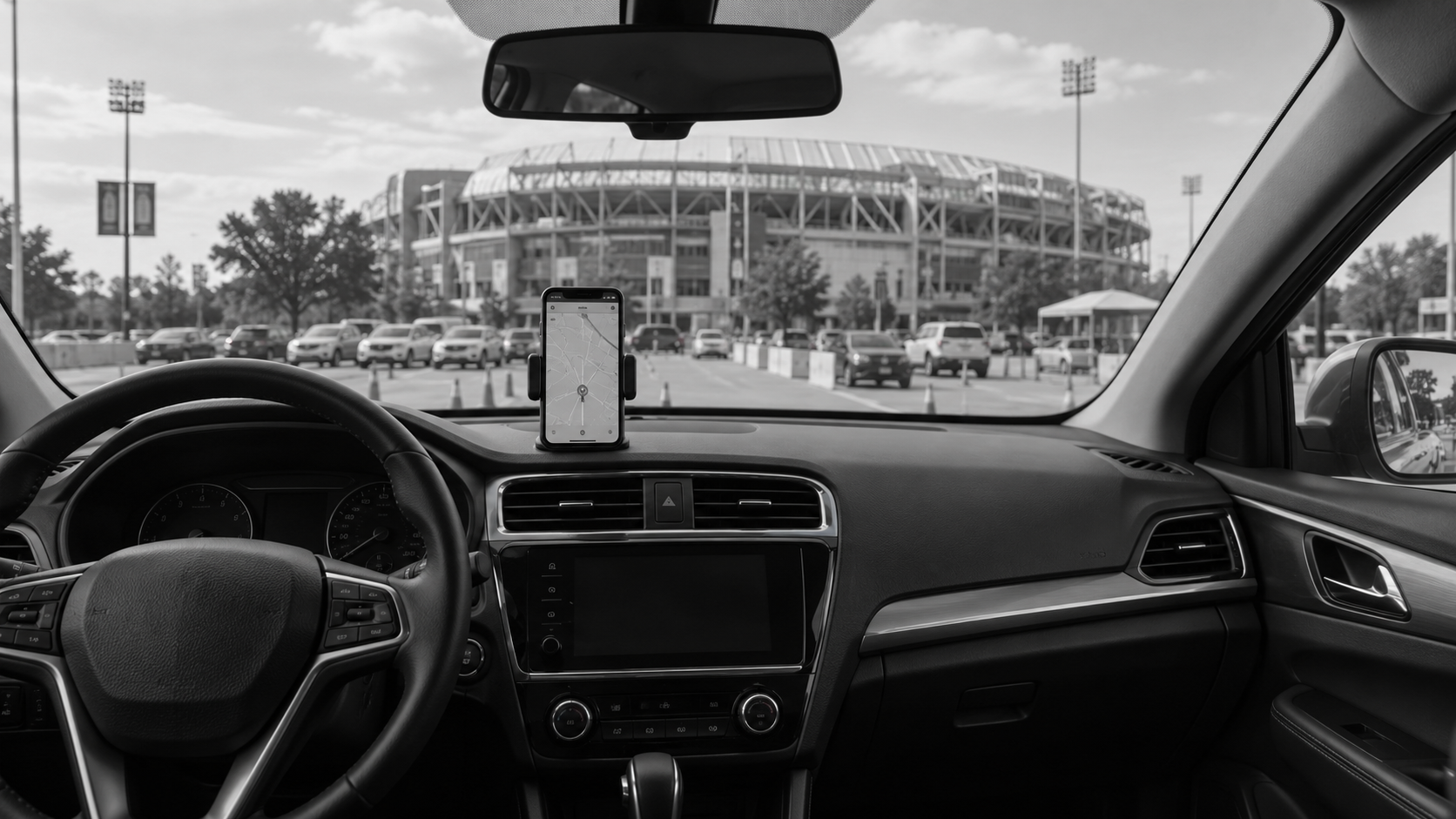
What matters when a rideshare driver is waiting?
A rideshare driver waiting in a stadium lot may be logged off, available for a request or already on the way to collect an accepted passenger. Those are not necessarily the same insurance situation. The absence of a passenger does not establish that the driver was off duty.
Before I identify the applicable coverage, I need a reliable timeline of the driver’s app activity and the collision. A statement that the driver was “just waiting” is a starting point. It may not describe the legal status of the trip.
How does New Jersey separate the coverage periods?
New Jersey’s transportation-network-company law requires primary insurance for a driver logged into the network and available for a request, and different coverage while providing a prearranged ride. The driver, company or a combination can supply the required coverage.
Under the statutory framework, the waiting period has minimum liability limits of $50,000 per person and $100,000 per incident for bodily injury, with $25,000 for property damage. A prearranged ride carries a $1.5 million minimum liability requirement. These are coverage requirements, not promises about a claim’s value or what a particular person will recover.
The waiting-period requirements also include primary PIP benefits at the amounts selected under N.J.S.A. 39:6A-4 and uninsured and underinsured motorist coverage to the extent required by N.J.S.A. 17:28-1.1. Those requirements differ from the benefits required during a prearranged ride. Whether an injured person qualifies for a particular benefit still depends on the applicable law and coverage.
If the driver-maintained insurance has lapsed or does not supply the coverage required for the applicable period, the company’s insurance must supply that required coverage beginning with the first dollar of the claim, and the company has a duty to defend the claim. Company-policy coverage cannot be conditioned on a personal auto insurer first denying the claim. These protections make it important to examine the required coverage rather than treat a personal-policy denial as the end of the inquiry.
A prearranged ride can begin when the driver accepts the request, before the passenger enters. If the app was off, the personal policy and any other applicable coverage need examination. I would obtain the actual policies rather than assume a company logo identifies the available insurance.
How do we establish the rideshare driver’s app status?
The driver’s phone display can be useful, but a screenshot taken later may not show the status at impact. The platform’s records may help establish when a request was accepted or a trip ended. Those records should be preserved while the timing is investigated.
For a passenger, the receipt and trip information are useful starting materials. For someone struck while walking through the lot, that information may not be immediately available. The lack of a passenger receipt does not end the inquiry.
I would compare the app information with the collision time and any available video. A discrepancy of a few minutes may matter if the driver accepted a trip during that interval. We should resolve it with records, rather than choose the description that produces the preferred coverage limit.
Does rideshare liability insurance pay every medical bill?
Not necessarily. Liability coverage addresses a different issue from benefits available to pay medical expenses while a claim is pending. The applicable benefit can depend on the person’s role and the coverage period.
The medical-benefit requirements differ between a driver who is logged in and available for a request and a driver providing a prearranged ride. The waiting-period requirements include primary PIP coverage. During a prearranged ride, the statute instead specifies a minimum $10,000 medical-payments benefit for the driver, and ordinary passenger PIP should not be assumed.
A pedestrian struck in the lot requires a separate review. In Boone v. Unsatisfied Claim and Judgment Fund, the Appellate Division held that a New Jersey-issued TNC liability policy must include the pedestrian PIP coverage required by N.J.S.A. 17:28-1.3. The claimant there lacked personal or household PIP coverage, and the Lyft driver was transporting a passenger. That protection should be considered if a pedestrian’s claim is denied on the ground that the active-ride policy contains no PIP coverage.
We should establish whether the driver was waiting for a request or already providing a prearranged ride, then identify the pedestrian’s available coverage. I would not tell someone to stop submitting bills to an existing carrier merely because a rideshare company is involved.
Keep any coverage letter, including a denial. The reason given may reveal that the carrier is using a different account of the app status. A denial is something to examine, not a substitute for our own assessment of the policy and the facts.
Can the stadium or another driver also be responsible?
Potentially, but a separate basis for negligence is needed. A parking operator does not become responsible merely because the collision occurred in its lot. If the claim concerns how traffic was directed, we need evidence of the directions and how they contributed.
Another driver’s conduct may also matter. Identifying rideshare coverage does not establish who caused the collision. Coverage and responsibility should be investigated together without treating one as proof of the other.
If a public entity may be involved, notice requirements need prompt attention. For the rideshare portion, the immediate priority is preserving the trip timeline and identifying the policies in effect. That gives us a sound basis to address coverage before making representations about the available recovery.
Sources and further reading
- New Jersey MVC: Transportation Network Company Safety and Regulatory Act
- New Jersey Legislature: Transportation Network Company Act, sections 3 and 10
- N.J.S.A. 17:28-1.3: pedestrian PIP coverage
- Boone v. Unsatisfied Claim and Judgment Fund (App. Div. July 24, 2026)
- N.J.S.A. 39:5H-10(b), (d) and (e): waiting-period coverage and company insurance obligations
Discuss your personal injury questions
If you have questions about a New Jersey personal injury matter, I am happy to discuss what happened and help you understand the next steps. Contact Fusco Law or call 732-INJURED (732-465-8733).
This article is general information, not legal advice. Reading it or contacting the firm does not, by itself, create an attorney-client relationship.