
How the PIP medical fee schedule affects a bill
The PIP medical fee schedule helps determine permitted reimbursement for covered medical services in New Jersey. A provider's original charge and the amount allowed under the applicable rules may differ. That difference should be understood before anyone assumes it is the patient's responsibility.
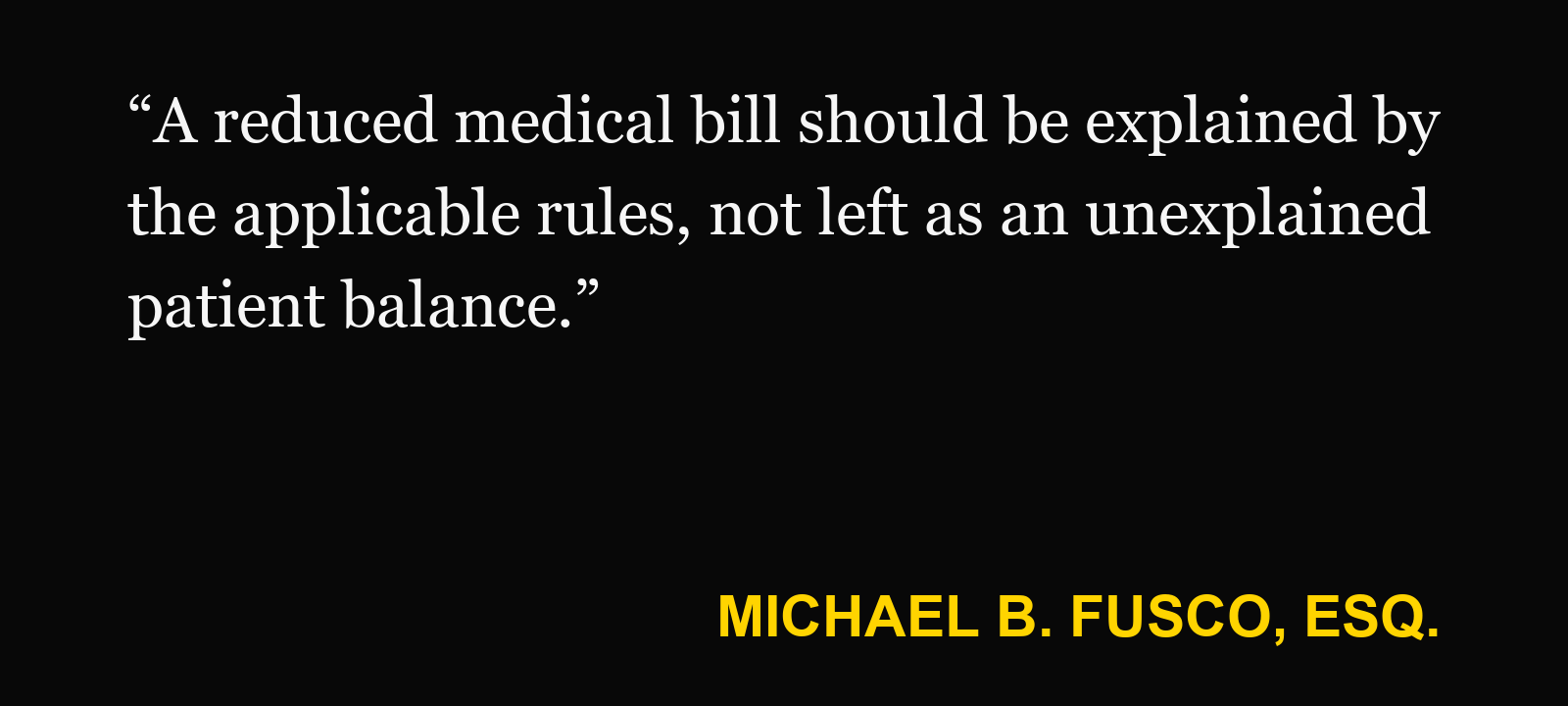
A reduced medical bill should be explained by the applicable rules, not left as an unexplained patient balance. I would compare the service billed, the insurer's calculation and the relevant rule before accepting the amount requested.
The fee schedule is a payment framework. It does not, by itself, decide whether a particular patient needs a test or treatment. Medical necessity and coverage are separate questions that may appear in the same explanation of benefits.
Keeping those issues distinct makes a dispute easier to address. A correction to a billing code is not the same response as a medical appeal, and neither should be confused with a disagreement about whether the policy covers the accident.
Match the payment to the service actually provided
The date, procedure and provider type can affect the applicable calculation. A general statement that the insurer paid according to the schedule may not explain whether it used the correct entry or method.
Ask for an itemized bill and the explanation of benefits. Compare the service descriptions and any adjustment codes. If the provider believes a code or unit was processed incorrectly, the supporting records should identify the specific discrepancy.
Different settings and services can involve different reimbursement rules. A hospital charge should not automatically be analyzed as if it were an ordinary office visit. The relevant provisions need to be selected for the actual service.
Not every payment question is resolved by locating one number in a table. The rules include circumstances requiring additional analysis. The provider or professional handling the billing dispute should explain the basis rather than assume the highest billed amount is necessarily payable.
Separate an allowable reduction from a denial
An allowed charge may still be subject to a valid deductible or copayment. A service may also be denied for a separate reason. The explanation should identify which part of the calculation reflects each issue.
If the insurer questions medical necessity, the treating provider may need to supply clinical support through the appropriate process. That cannot be answered solely by pointing to a fee-schedule entry for the procedure.
If the dispute concerns authorization, the request and response history matter. A provider may have submitted the necessary material, or the carrier may be relying on a requirement that does not apply to the service. The facts need review.
Clear categorization helps avoid an appeal that addresses the wrong problem. It also helps the patient understand why the bill remains open and who is responsible for the next step.
Review any amount sought from the patient
New Jersey's fee-schedule rules prohibit demands for amounts exceeding what the applicable provisions permit. A provider should not automatically shift a prohibited excess charge to the patient simply because the insurer did not pay the original bill.
That does not mean every remaining balance is prohibited. A valid deductible or other lawful patient obligation may still exist. The distinction should be established from the insurer's calculation, policy and applicable rules.
The forms signed at the office also may need review, but they do not automatically override legal billing restrictions. Obtain the actual agreement rather than rely on a summary that the patient signed responsibility for everything.
If the account is sent to collections, address it promptly with the supporting records. The collection issue may involve additional rights or deadlines. A payment dispute should not be left unattended merely because an appeal is also pending elsewhere.
If the provider billed several services on the same date, the explanation may apply a payment rule affecting how those services are calculated together. The office can identify whether the carrier used the correct codes and supporting facts. The patient should not be expected to resolve that technical question from a single total. A specific explanation also makes any later challenge more useful than a general objection to the amount paid.
Keep the final accounting accurate
When the carrier reprocesses a bill, compare the updated result with the provider account. Payments and adjustments should be credited accurately. A previous patient payment may require review if insurance later pays the same expense.
Before settling the personal injury claim, unresolved medical balances should be identified. A disputed or prohibited amount should not be treated as a confirmed deduction without analysis. The client deserves an understandable explanation of the expected net recovery.
Maintain the final explanation of benefits and any written resolution. Those records can help answer later inquiries and show that the particular bill was addressed.
If you receive a medical statement that does not match the PIP explanation, bring both for review. The applicable rules can help distinguish a legitimate patient charge from an amount that needs correction or challenge.
Sources and Further Reading
About Michael B. Fusco
Michael B. Fusco is a New Jersey personal injury attorney certified by the Supreme Court of New Jersey as a Civil Trial Attorney. Read Mike’s biography and credentials.
Discuss Your Personal Injury Questions
If you have questions about an injury in New Jersey, I am happy to discuss what happened and the options the facts may support. You do not need to have every document or answer before contacting us. Call 732-465-8733 or contact Fusco Law for a free personal injury consultation.
General Information
This article provides general information, not legal advice for a particular situation. Laws and policy terms must be applied to the actual facts. Reading this article or contacting the firm does not, by itself, create an attorney-client relationship.