
In This Article
Mike’s Quick Answer
There are a lot of facts we need to know before we can give a reliable estimate of injury case value. Some may seem clear at the outset. Others require investigation. Just because we believe something happened does not mean the other side will agree, or that we can automatically establish it as evidence. That is why a case valuation has to develop with the case.
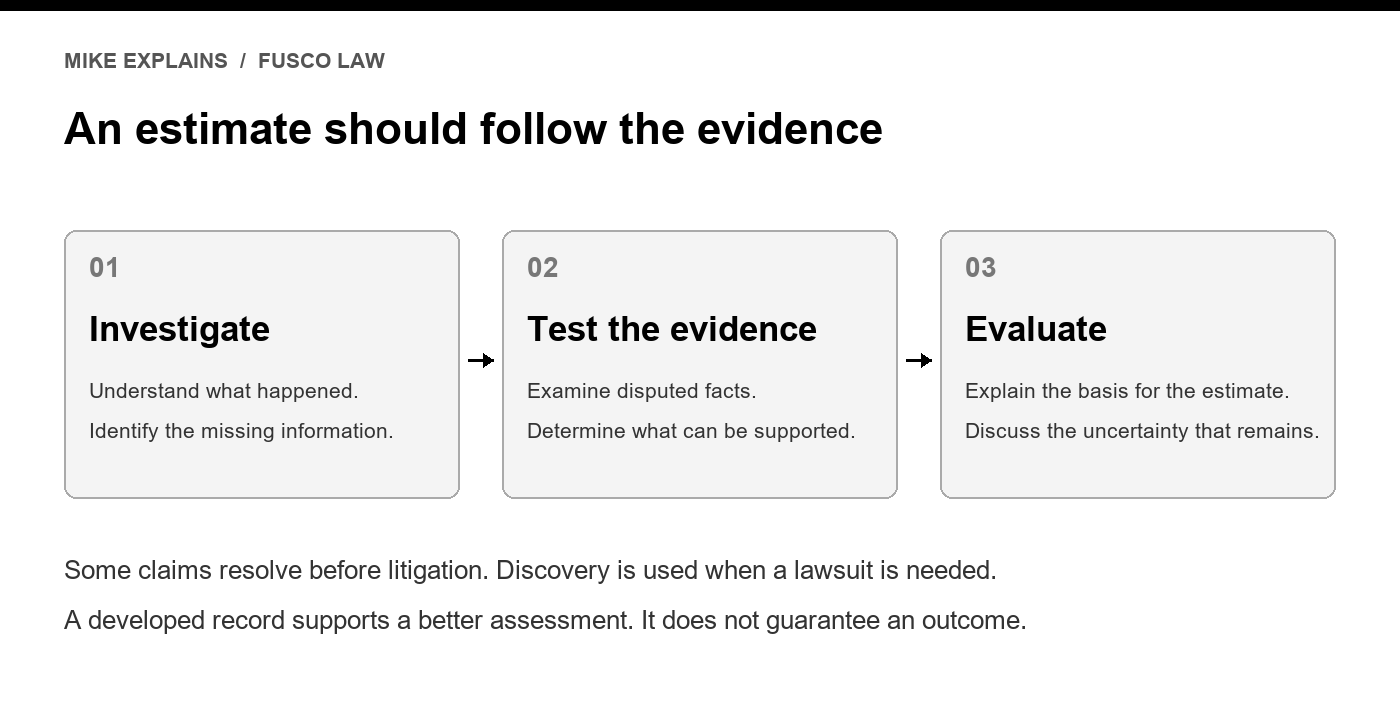
If a lawsuit is necessary, the most informed estimate will often come after discovery is completed. Discovery is the litigation process through which the parties exchange information and obtain evidence. It helps us move from what we believe happened to what we can support. Some claims can be evaluated and resolved before a lawsuit, when sufficient information is available. Either way, the estimate should follow the evidence.
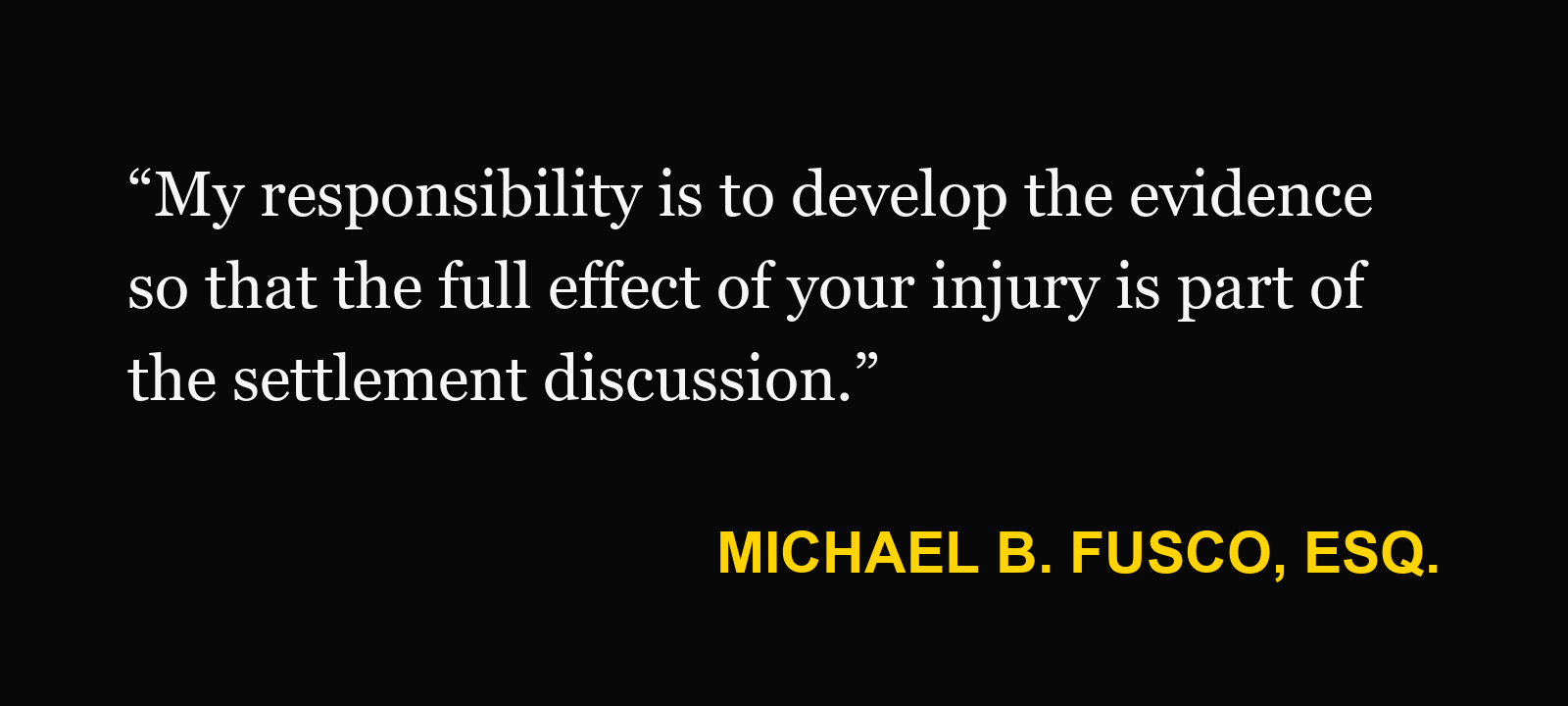
A client deserves a reliable explanation of case value and the work being done to support it. My responsibility is to develop the evidence so that the full effect of your injury is part of the settlement discussion. An early estimate can be too low or too high if important facts are missing. I would explain what we know, what we are working to establish and when the assessment can become more dependable.
Injury Case Value Involves More Than the Diagnosis
A case valuation should reflect the person behind the diagnosis. The effect on work and daily life may differ substantially between people with similar injuries. I would examine your circumstances alongside the evidence of responsibility so that the assessment addresses the actual consequences for you.
Pain and physical limitations deserve attention even when they are not apparent to someone looking at you. Tell me what has changed in ordinary terms. Difficulty standing through a workday, for example, helps explain the injury's practical effect. I would work to connect that experience with the medical evidence so it receives proper consideration.
Investigating available insurance is another part of pursuing recovery. Where appropriate, that includes examining uninsured or underinsured motorist coverage in an automobile case. Policy terms and limits can affect what is collectible, so they need individual review. I would identify the available sources rather than stop the analysis at the first policy mentioned.
Medical Information Helps Make Case Valuation More Reliable
Your treating providers are the appropriate people to explain your diagnosis and likely recovery. My role is to understand how that medical information affects the claim. If further treatment is being considered, an early estimate may not account for needs that have not yet been assessed.
You may hear the term maximum medical improvement. It generally refers to a point at which substantial further recovery is not expected, although its use can differ by setting. The term is not a universal rule that every case must reach before settlement can be discussed. What matters is whether the medical outlook is sufficiently understood for the decision being considered.
Possible future care deserves attention before a final settlement because a release ordinarily resolves the claims it covers. I would consider the medical outlook and protect the applicable legal deadlines while the case develops. That allows us to discuss timing as a considered decision based on your needs and the evidence.
Evaluate an early offer against the full claim
An early insurance offer should be measured against the evidence of the injury and its effects. I would examine the information behind the proposal and identify anything material that remains missing. If future care or time away from work has not been properly considered, those issues deserve attention before you make a decision.
Some claims can be evaluated relatively early because the relevant evidence is available and the medical picture is sufficiently clear. Others need more development. I would assess the offer on the facts of your case and explain whether further work is needed to support a sound settlement recommendation.
Before a client makes a decision, I want to explain what the proposed agreement would resolve and what uncertainty remains. If additional information could materially change the assessment, we should discuss how to obtain it. That conversation should also address any actual deadline for responding. A client should understand the reason for a recommendation rather than feel that a settlement decision is being made for them.
The same work also prepares a response to an offer that understates the claim. If an insurer has evaluated missed earnings using an incomplete work history, obtaining the relevant employment records can help correct that assessment. Where future care is an issue, a medical explanation may be needed to show what is reasonably anticipated. I would identify the basis for the disagreement and present the supporting information, so the negotiation addresses the injury’s documented consequences.
Comparable Results Can Inform Case Value, but Do Not Set a Price
Results in other matters can provide context when the relevant facts are understood. Your claim deserves its own analysis of the evidence and the effects of the injury. I would explain which comparisons are useful and why the recommendation fits your circumstances.
For example, a recording might resolve a dispute about how an accident happened. Without it, the parties may have very different accounts and the outcome may be less predictable. That difference can affect case valuation without changing the injury itself.
A personal assessment can address questions an online settlement calculator cannot evaluate. It can examine the available insurance and consider the strength of the evidence in a disputed claim. You should understand how the estimate was reached and what work supports it, rather than receive a number detached from your circumstances.
I think of developing a case as gathering the pieces of a puzzle. A few pieces may suggest what the picture will be, but they do not show us the whole image. Discovery can supply missing pieces and test whether the ones we started with fit as we expected. Once the important evidence is developed, we have a much better basis for explaining case value.
Developing the evidence gives us a stronger basis for that conversation, even where the parties continue to disagree about the result. I would explain the remaining issues and how they affect the recommendation. You should be able to weigh your choices with a clear understanding of the case we have built.
What discovery can add to an injury case valuation
Discovery is more than collecting a larger stack of documents. It gives the parties a formal process for requesting information and examining the facts in dispute. Written questions and document requests may establish what the other side knows. A deposition allows a witness to answer questions under oath. Which steps are appropriate will depend on the issues in the case.
Consider a collision in which the drivers disagree about the traffic signal. At the beginning, I may have my client’s account and a police report. Those are important starting points, but they may not resolve the dispute. A witness or a recording could provide additional support. Discovery may also clarify exactly what the other driver claims happened. The purpose is to test the accounts against the available evidence.
A reliable injury case value estimate depends in part on establishing how useful information can be presented as evidence. A document may require authentication, or a statement may raise an evidence-rule question. I would address those issues as the record develops so that the facts supporting your claim have a sound foundation.
If discovery produces a fact the defense may use, I would address it directly and investigate its significance. Careful preparation includes understanding the other side's position and identifying the evidence needed to respond. The purpose is to give you informed advice while advocating for the value the full record supports.
A developed record supports informed settlement decisions
At the end of discovery, we can discuss injury case value with a substantially fuller picture of the evidence. The parties may still disagree about a witness or the effect of an injury. I would explain those differences and how the developed record supports our position, so that any recommendation has a clear basis.
For that reason, a reasoned range may be more useful than a single number that appears exact. I would explain the assumptions behind the assessment and the issues that could lead to a different result. The client can then consider a settlement recommendation with an understanding of the uncertainty that remains. Precision in the number is not a substitute for precision in the explanation.
5 Questions to Discuss About the Value of an Injury Case
A conversation about case value should help you understand the recommendation. These are reasonable questions to raise with your lawyer. You do not need to know the legal terminology to ask them.
What supports this estimate?
I should be able to explain which evidence is doing the work. There is a meaningful difference between an initial assessment based on your account and a case valuation supported by the relevant records. If an estimate is preliminary, that should be clear.
What are we still waiting to learn?
Sometimes the missing information is a medical opinion about future care. In another case, we may still be investigating responsibility for the accident. You should understand what remains open and what is being done to address it. Uncertainty is easier to assess when it is explained specifically.
What could change the case valuation?
New evidence can change a case valuation, and you deserve to understand why. I would explain what the development adds and how it affects the recommendation. That includes evidence that strengthens the claim as well as issues requiring a response, with a practical explanation of the next step.
How does the proposed amount compare with what I would receive?
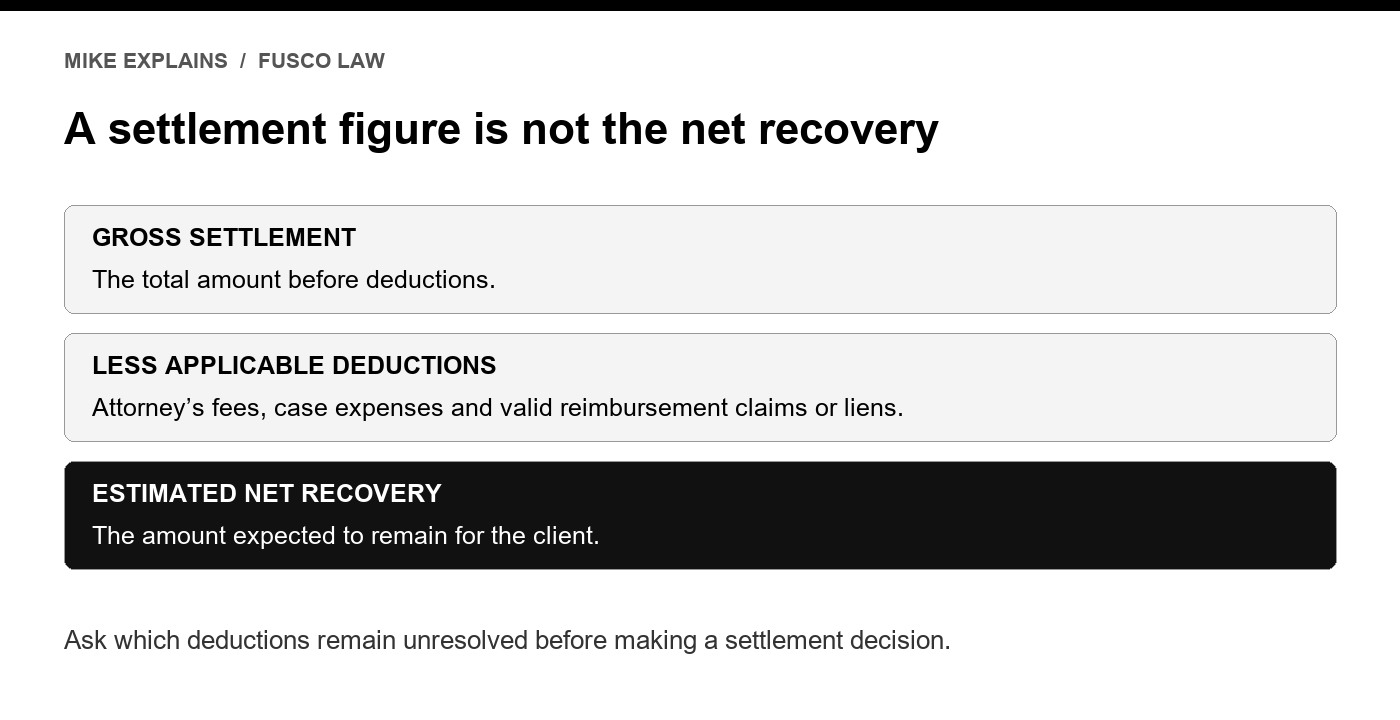
A gross settlement figure is different from an estimated net recovery. Attorney’s fees and case expenses affect the distribution. A reimbursement claim or lien may also need to be addressed. Before deciding whether to accept an offer, ask for an explanation of the anticipated deductions and any amounts that remain unresolved.
When should we revisit case value?
We should revisit value when meaningful information arrives, such as an important medical opinion or evidence resolving a disputed issue. I would explain the significance of that development and whether it supports a more reliable assessment. Keeping you informed is part of helping you make the decisions that remain yours to make.
What I would expect an injury case value update to explain
A useful update connects the recommendation to something concrete. If we have received a medical opinion about future care, I should explain how it affects the assessment. If the available insurance has been confirmed, I should explain what that does and does not resolve. The client should not have to infer the significance of a development from a document arriving in the mail.
The explanation should also distinguish the value supported by the claim from an offer that happens to be on the table. An offer is a negotiating position. It may be useful information, but it is not an independent finding of what the case is worth. I would evaluate the proposal against the evidence and explain the basis for my advice.
Time away from work and financial pressure are real concerns while a case is pending. They deserve a direct conversation about the choices available and the reasons for a recommendation. I would explain the practical options while keeping the assessment grounded in the evidence, so that you can make an informed decision about your claim.
A Few Related Questions
Can we discuss the value of an injury case during the first call?
Yes. An initial conversation can explain the factors affecting value and the evidence needed to assess them. I would identify what can be addressed now and what further work would make the estimate more dependable. You should leave with a clearer understanding of the process and the next steps.
Do medical bills determine case value?
Medical bills are part of the picture, but the evaluation should also consider the injury's effect on your life and the evidence of responsibility. I would assess the recoverable losses under the rules that apply to your claim. The aim is to evaluate the full supported impact rather than reduce your experience to the amount of a bill.
Who decides whether to accept a settlement?
The client decides whether to accept a settlement. My responsibility is to explain the offer, provide a reasoned recommendation and discuss the risks and potential benefits of continuing. You deserve the information needed to make that decision, together with an advocate prepared to support the advice being given.
Does a reliable estimate require filing a lawsuit?
Not in every case. Some claims can be evaluated using information obtained before litigation and resolved without filing suit. Other claims require discovery to address a meaningful dispute or obtain evidence that is not otherwise available. The important point is whether the case is sufficiently developed for the advice being given, not whether a particular procedural step has occurred in every matter.
I would explain why litigation is or is not being recommended in your case. It should serve a reason grounded in the claim and the applicable deadlines. The same care applies to injury case value: the estimate should be supported by the information available, with its limitations made clear.
Sources and Further Reading
About Michael B. Fusco
I am Michael B. Fusco, a New Jersey personal injury lawyer who is Certified by the Supreme Court of New Jersey as a Civil Trial Attorney. For more than 15 years, I have represented injured people throughout New Jersey and have recovered more than $75 million in gross settlements and verdicts. I started Fusco Law because clients deserve direct answers, careful preparation, and a lawyer who remains personally involved. I can help guide clients through the complexities of a New Jersey personal injury case from the first investigation through settlement or trial. Past results do not guarantee future outcomes.
General Information
This article provides general information about New Jersey law. It is not legal advice for your particular circumstances. Reading this page or submitting a website form does not, by itself, establish an attorney-client relationship. Every matter depends on its facts and the applicable law. Past results do not guarantee future outcomes. Please do not send confidential information through the website form.
Questions About Your Own Injury Claim?
This article is general information, not legal advice about your situation. If you have questions about the value of an injury case or another New Jersey personal injury matter, I’m happy to discuss them with you. Call Fusco Law at 732-465-8733 or use our contact form to request a consultation.