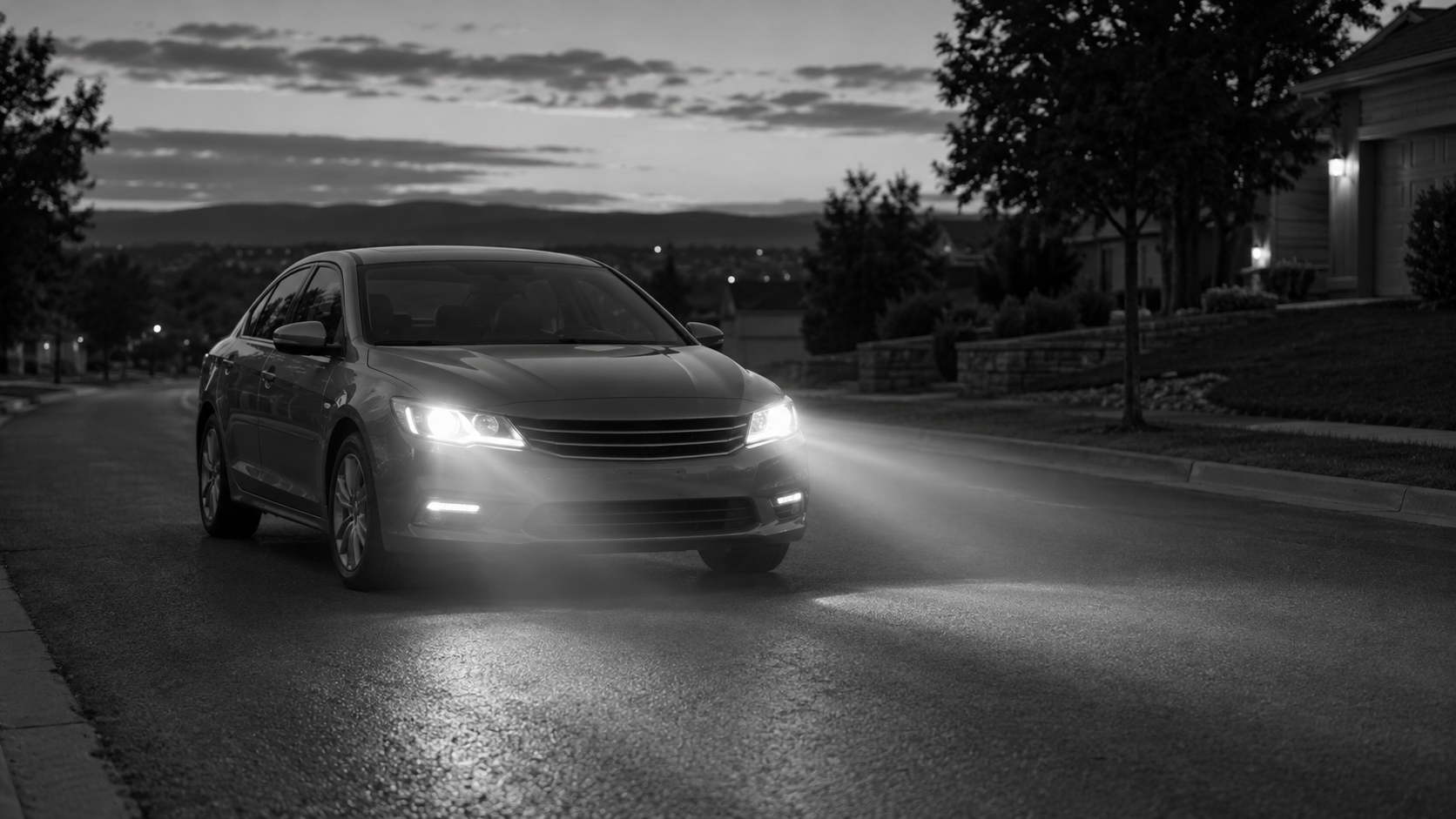
How does headlight use affect responsibility?
Headlight use can affect responsibility when it changes what a driver could see or how readily another person could see the vehicle. But identifying a lighting problem is only part of the work. We also need to establish whether it contributed to the collision.
I would not assume that darkness excuses a driver, or that a person injured after dark must share the blame. The evidence should explain the actual opportunity to see and respond. That is more useful than starting with a percentage of fault and trying to justify it afterward.
When are headlights required in New Jersey?
New Jersey requires headlights from one-half hour after sunset until one-half hour before sunrise. They are also required when visibility is 500 feet or less and when windshield wipers are in use because of rain, snow or ice. The MVC Driver Manual explains these requirements and the need to use lights appropriately.
An automatic setting does not eliminate the need to make sure the required lights are operating. Daytime running lights also may not activate the rear lights. The vehicle’s equipment and settings should be checked rather than inferred from the fact that the dashboard was illuminated.
Meeting a basic lighting requirement does not answer every reasonable-care question. A driver may still need to adjust to limited visibility. Conversely, an equipment issue unrelated to the impact does not automatically establish responsibility for it.
What could each person reasonably see?
The relevant view may be quite different from a photograph taken later. A curve can limit the approach. Glare from another vehicle can affect detection. We need to reconstruct the circumstances at the time, not simply inspect an empty road during daylight.
A posted speed limit is not a guarantee that the same speed is reasonable under every condition. The ability to recognize a hazard and respond should be considered with the available sight distance. That assessment may require more than either driver’s initial estimate.
Video can help, but its brightness is not a direct measurement of human vision. Camera exposure and the location of the lens affect what appears in the recording. Where visibility is disputed, appropriate technical analysis may help explain what the recording does and does not establish.
Does a lighting violation decide comparative fault?
No. The civil claim still requires a connection between the conduct and the injury. The existence of a citation should not be confused with a final determination of responsibility. A lawyer needs to examine the evidence underlying it and its legal significance.
Under New Jersey comparative-negligence principles, an injured person’s share of responsibility can reduce recovery and, when the applicable threshold is exceeded, bar recovery. The allocation is based on conduct that contributed to the harm. It is not automatically divided equally because both parties were present.
The same care applies to a pedestrian’s clothing. Dark clothing may be discussed in a visibility analysis, but it does not by itself establish negligence. Crossing location and the driver’s opportunity to observe the person must be considered in context. An injured pedestrian deserves an investigation of those facts, not an assumption based on appearance.
How should headlight use be documented after a crash?
Preserve any original dashcam footage and tell your lawyer whether the vehicle is awaiting repair or disposal. In a disputed lighting case, the condition of the lamps and controls may be relevant. An inspection should be handled safely and, where needed, by someone qualified to interpret the findings.
Write down what you remember about the conditions without trying to reconstruct details you did not notice. A witness may recall whether the vehicle was visible before impact. A nearby camera may supply a different angle. Those sources can help test the initial accounts.
The purpose is to determine how visibility actually affected the collision. A reliable opinion about fault comes from bringing that evidence together, including facts that may challenge our first understanding of the event.
Sources and further reading
Discuss your personal injury questions
If you have questions about a New Jersey personal injury matter, I am happy to discuss what happened and help you understand the next steps. Contact Fusco Law or call 732-INJURED (732-465-8733).
This article is general information, not legal advice. Reading it or contacting the firm does not, by itself, create an attorney-client relationship.