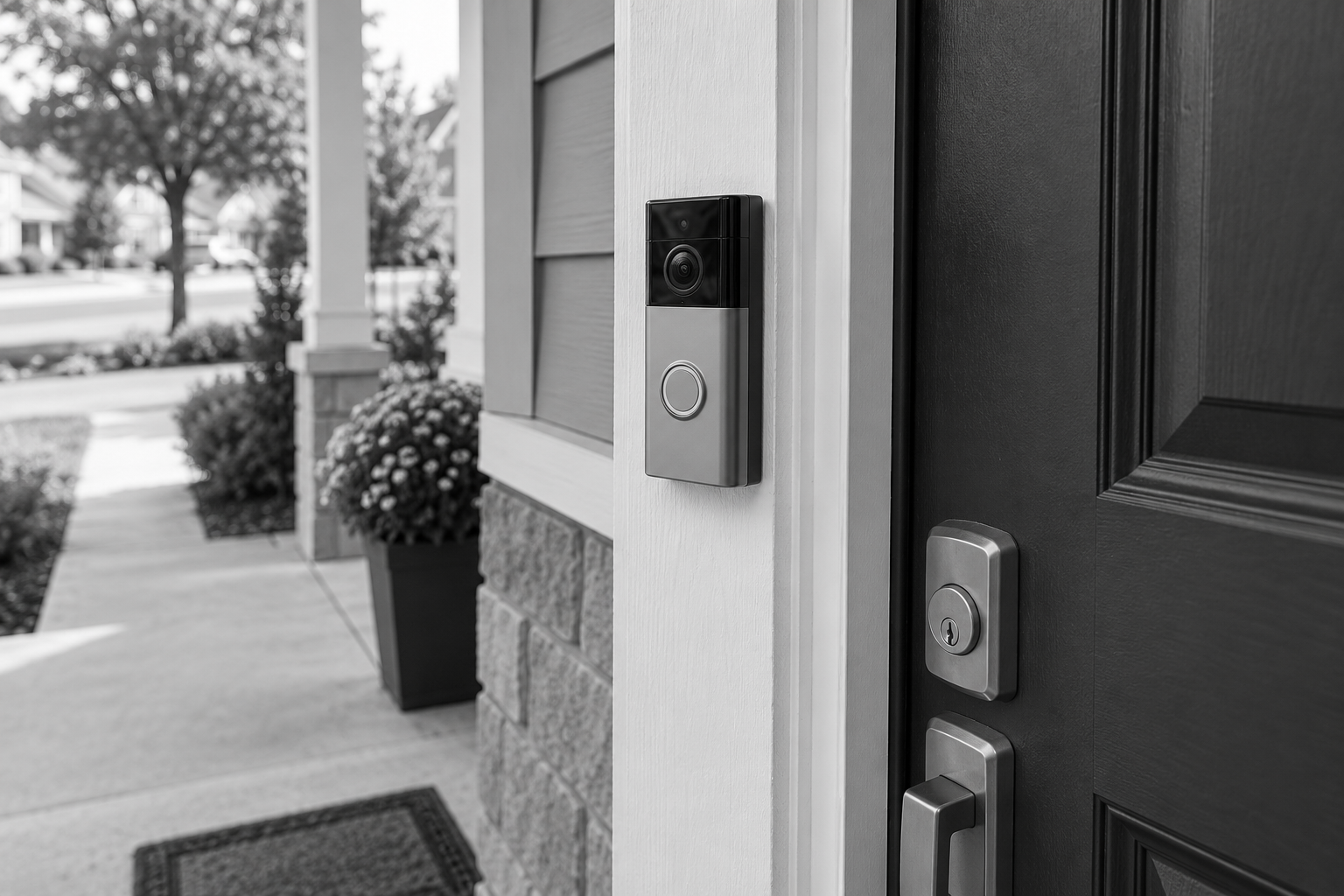
Preserving Doorbell Video After an Injury
Doorbell video can provide a useful view of an accident near a home or entrance. It may show only part of the event, and availability depends on the owner's equipment and settings. If a camera may have captured something relevant, identifying the owner and asking promptly about preservation can protect an opportunity that might otherwise be lost.
A prompt request can help preserve the details that allow your experience to be understood fairly. The request does not need to accuse anyone of wrongdoing. Its purpose is to retain an existing record while the facts are investigated and the appropriate method for obtaining a copy is considered.
This article addresses residential doorbell systems. A business's surveillance system can involve different staff, vendors and procedures. In either setting, the important first question is whether a relevant recording exists and can be saved in an appropriate form.
Identify the View and the Relevant Time
The camera's direction can help determine whether it might have captured the event. A front-door view may show a sidewalk but not the adjoining intersection. It may capture a person approaching even when the fall or collision occurred just outside the frame.
Record the address and the approximate accident time from a safe, lawful location. If there is uncertainty about the time, identify the basis for the estimate. A receipt or call history may help narrow it. The owner needs enough information to locate a clip without searching an entire history unnecessarily.
The useful period may extend beyond the instant of injury. Earlier footage might show the condition of an area or the approach to it. Later footage may clarify the immediate aftermath. The request should explain that relevance rather than simply demand everything available.
Some systems create motion-triggered clips rather than continuous recordings. A gap between clips may reflect how the equipment operates. That possibility should be checked before drawing conclusions about an event that does not appear in the recording.
Make a Respectful Preservation Request
A homeowner may be willing to help but unfamiliar with legal evidence. A clear request can identify the date, time range and camera view and ask that relevant material be retained. It should distinguish keeping the recording from granting access to the entire account.
Avoid entering property without permission or pressing a resident for account credentials. If a direct conversation becomes uncomfortable, counsel can handle further communication. The goal is cooperation and accurate preservation, not a confrontation at someone's home.
Keep a record of whom you contacted and the response. If a clip was already downloaded, ask that the original download and any information about its source be retained. A lawyer can then address the appropriate way to receive it securely.
A preservation request does not itself compel production. If voluntary access is declined, the available legal process depends on the circumstances and stage of the claim. That question should be reviewed without allowing the distinction between preservation and access to become confused.
Keep a Usable Original and an Accurate Explanation
A phone recording of a playback screen may help identify that footage exists, but it can omit detail. When possible, a supported download from the system provides a better source for later review. The owner should not have to experiment with unfamiliar software to satisfy a request.
The received file should be kept unchanged, with a separate copy for ordinary viewing. If a shorter clip is prepared to explain an issue, retain the longer relevant material as well. That allows someone reviewing the case to assess the context rather than rely on a selected excerpt.
Time settings should be checked. A displayed timestamp may not correspond exactly to the accident time recorded elsewhere. The person familiar with the system or an appropriate technical professional can help explain how it was configured.
The source of the recording matters to authentication. Knowing who retrieved it and from which camera helps establish what the evidence is. That information is easier to preserve when the file is collected than to reconstruct much later.
Use the Footage Fairly in the Injury Claim
A doorbell camera has a fixed viewpoint. It may show a condition without showing what a person could see from their position. Distance and lighting can affect interpretation. The video should be compared with photographs and witness accounts rather than treated as an all-seeing record.
The recording may also contain private activity unrelated to the claim. Sharing should be limited to the appropriate legal process and people who need it. Posting the clip publicly can create privacy concerns and is not necessary to preserve its evidentiary value.
If no footage remains, document the answer and consider other sources. A missing clip is not proof that the injury did not occur. The owner may have had no subscription, the camera may not have triggered or the material may have expired before the request.
Early legal guidance can help identify a useful camera, preserve the relevant period and pursue a proper copy. The aim is to develop an accurate account of your injury while treating the people who may hold the evidence respectfully.
Sources and Further Reading
About Michael B. Fusco
Michael B. Fusco is a New Jersey personal injury attorney certified by the Supreme Court of New Jersey as a Civil Trial Attorney. Read Mike’s biography and credentials.
Discuss Your Personal Injury Questions
If you have questions about an injury in New Jersey, I am happy to discuss what happened and the options the facts may support. You do not need to have every document or answer before contacting us. Call 732-465-8733 or contact Fusco Law for a free personal injury consultation.
General Information
This article provides general information, not legal advice for a particular situation. Laws and policy terms must be applied to the actual facts. Reading this article or contacting the firm does not, by itself, create an attorney-client relationship.