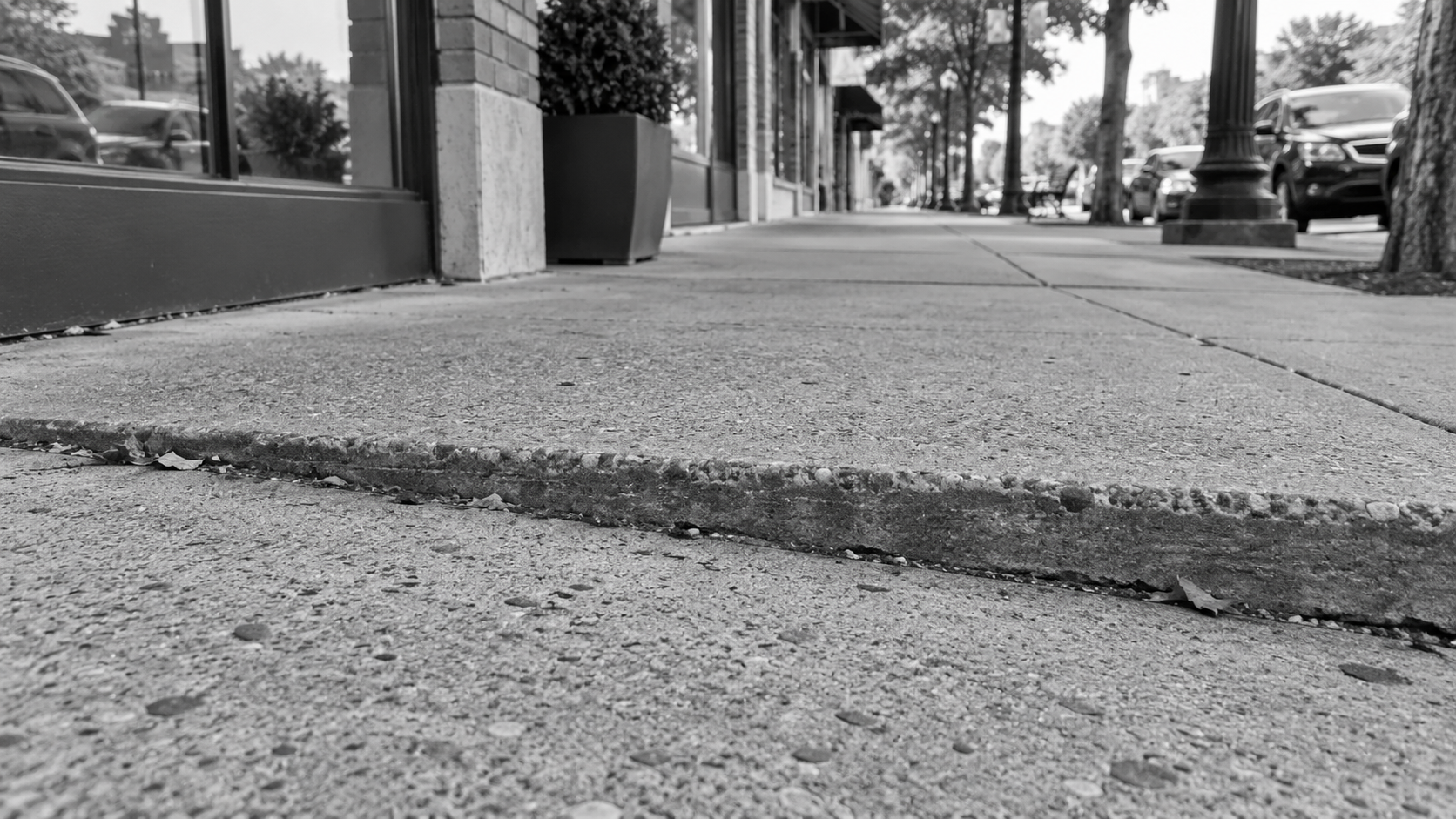
A sidewalk fall outside a store deserves a closer look
A sidewalk fall outside a store can involve responsibility on the part of a commercial property owner. The fact that the walkway is open to the public does not, by itself, make the municipality the only party worth investigating. In New Jersey, commercial landowners have an established duty to maintain abutting public sidewalks in reasonably good condition. The particular defect and its connection to the injury still need to be proved.
I would begin with the exact place where you fell. A raised slab immediately outside the entrance raises different questions from a broken curb farther along the block. The store name gives us a starting point, but the photograph and property records help identify the right people. A careful investigation can identify who was responsible for keeping a commercial sidewalk reasonably safe.
You should not have to resolve property ownership before calling a lawyer. That is part of the work involved in evaluating the claim. Your immediate priorities are getting appropriate care and preserving the information you can safely obtain.
Identify the condition that interrupted your step
Try to describe what happened in ordinary terms. Your toe may have caught on a raised edge, or your foot may have slipped on material covering the walkway. If you did not see the condition until afterward, explain that. A description is more useful when it separates what you remember from what you learned later.
Photographs should show the particular defect and enough of the surroundings to locate it. A close photograph of uneven concrete may be important, but an image showing the nearby storefront can establish which stretch of sidewalk we are discussing. Keep the original files, including photographs taken by someone accompanying you.
There is no reason to return to an unsafe location or attempt measurements while injured. A family member may be able to preserve a photograph from a safe position. Counsel can arrange further investigation when necessary. Your treatment should not be delayed to assemble evidence.
Commercial ownership is more important than the sign over the door
The business operating the store may rent its space. The landlord may own an entire row of shops, and a separate company may perform maintenance. Those relationships are relevant because responsibility cannot reliably be assigned from the storefront sign alone.
New Jersey's Supreme Court has explained that the commercial-sidewalk duty also extends to owners of vacant commercial lots. An empty storefront or undeveloped commercial property is therefore not an automatic answer to a pedestrian's claim. The property's actual classification and the applicable legal duties require review.
Residential property is treated differently in important respects. I would not apply the commercial rule to a neighboring home without examining its use and the relevant circumstances. The purpose of identifying ownership is to apply the correct duty, not to assume that every adjacent owner has the same responsibility.
Establish how the condition developed
A photograph taken after a fall may establish what the sidewalk looked like that day. Additional evidence may help explain how long the condition existed or whether someone created it. Repair records, earlier complaints and a witness familiar with the location can become important here.
The question of notice depends on the theory of liability and the facts. If a party created a dangerous condition through its own work, the analysis may differ from a condition that developed later. If the claim concerns a longstanding defect, the investigation should seek evidence supporting that history rather than simply describing the defect as old.
A nearby business may have video showing the fall or the area before it. Video systems can overwrite recordings, so a request to preserve the relevant period should be considered promptly. Asking a cashier whether cameras exist is helpful information; it does not establish that the footage has actually been retained.
Explain the injury in the context of your daily life
Tell your treating professionals how you fell and what changed afterward. If you had an earlier problem with the same body part, explain how it was functioning before this event. An existing condition does not eliminate the need to investigate a new injury or a meaningful aggravation.
I want to understand the practical effects as well as the diagnosis. Difficulty standing through a work shift may be important even when an office visit captures only a brief examination. Describe the activity and the limitation accurately, without trying to make every day sound the same.
Keep relevant treatment and work information as the case develops. A reliable assessment of damages comes from understanding the course of recovery and the evidence supporting it. The first appointment usually cannot answer every question about the eventual impact.
Preserve the available options promptly
Reporting a fall to the store can create a useful record, but it does not start a lawsuit or necessarily notify the property owner. Keep the report number and the name of the person who received it. If the business declines to give you a copy, tell counsel rather than treating the missing copy as the end of the inquiry.
Some locations involve public ownership or another party with special notice requirements. Those possibilities should be identified promptly even when the principal investigation concerns a commercial property. A general discussion of ordinary personal injury deadlines should never substitute for checking the actual defendant and claim.
The practical next step is to review the location and the evidence together. A fall outside a business deserves an informed assessment of commercial responsibility, the condition that caused the fall and the injury it produced.
Sources and Further Reading
About Michael B. Fusco
Michael B. Fusco is a New Jersey personal injury attorney certified by the Supreme Court of New Jersey as a Civil Trial Attorney. Read Mike’s biography and credentials.
Discuss Your Personal Injury Questions
If you have questions about an injury in New Jersey, I am happy to discuss what happened and the options the facts may support. You do not need to have every document or answer before contacting us. Call 732-465-8733 or contact Fusco Law for a free personal injury consultation.
General Information
This article provides general information, not legal advice for a particular situation. Laws and policy terms must be applied to the actual facts. Reading this article or contacting the firm does not, by itself, create an attorney-client relationship.