How 911 Calls and Body-Camera Video Can Help
911 calls and police body-camera video can provide useful evidence in a New Jersey injury case. They may capture early descriptions, conditions at the scene or information identifying witnesses. I would request the relevant records and evaluate them alongside the other evidence. A recording can be important without being a complete account of everything that happened.
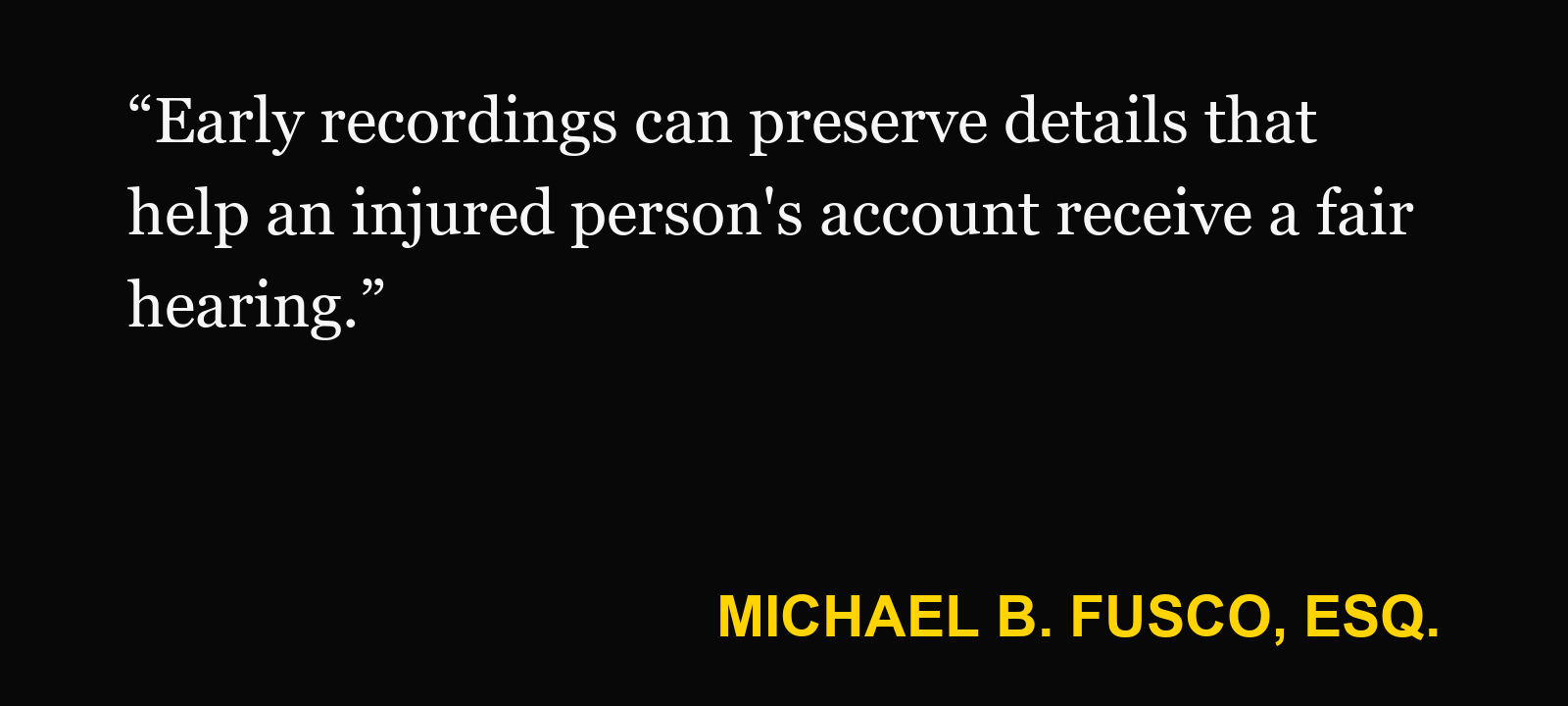
Early recordings can preserve details that help an injured person's account receive a fair hearing. Someone seeking emergency help may describe a hazard before the scene changes. An officer's camera may record conditions that are no longer visible by the time an investigator arrives.
Emergency Calls Can Clarify Timing and Observations
A 911 recording may establish when a request for help was made and what the caller reported. Background sounds or follow-up questions may add context. Dispatch records can sometimes help connect the call to the response and incident number.
Early statements still need to be evaluated carefully. Stress and limited visibility can affect what a person understands. A caller may repeat something heard from someone else. Those possibilities should be examined rather than assuming the first account must be either complete or wrong.
The words should be considered in context. A person focused on getting an ambulance may not describe every symptom or detail. An omission from that conversation should be evaluated in light of its purpose and the surrounding evidence.
A Body Camera Has a Limited View
Body-camera footage shows what the camera captured, which may differ from what everyone at the scene could see. Activation time, camera position and sound quality can affect the record. Important events may have happened before the officer arrived or outside the frame.
The footage can still be valuable. It may document the scene before vehicles are moved or a condition is corrected. It can also identify a witness whose contact information was not included in the brief narrative of a report.
I would seek enough surrounding footage to understand the relevant segment. A short clip can be useful for presentation, but the original context should remain available. The case should not depend on a dramatic excerpt that leaves a misleading impression of the full recording.
Preserve the Record Before Resolving Access Questions
Different agencies may hold the call, dispatch information and officer video. A request should identify the date, location and incident number if available. The custodian may need additional information to locate the correct material.
Retention depends on the record and applicable requirements. Some recordings may be held longer because of the nature of the incident, while others face routine retention limits. Prompt preservation is safer than assuming every police recording remains available indefinitely.
Public access and preservation are separate issues. An exemption, privacy concern or ongoing investigation can affect disclosure. That should not necessarily delay a request that the relevant material be retained while the proper access route is evaluated.
Understand What Public-Records Procedures Can Provide
New Jersey public-records law may provide an avenue for requesting certain materials, subject to applicable restrictions. Some information may be redacted, and some disputes may require another legal process. A response should be reviewed for the particular basis given rather than treated as a universal refusal.
Civil discovery may present separate options in a filed case. The appropriate method depends on the record, the custodian and the proceeding. I would explain what is being requested and what steps may be necessary if access is limited.
Sensitive information about unrelated people should be handled carefully. Obtaining a recording for a case does not mean it should be posted publicly. The use should remain tied to the investigation and any court requirements governing disclosure.
Admissibility Requires More Than Having a Video File
The recording must have an appropriate foundation showing what it is. Statements within it may raise hearsay questions depending on the purpose for which they are offered. An exception may apply in some circumstances, but that analysis is separate from simply identifying the file.
The source copy, accompanying records and any redaction history can help establish a reliable foundation. An unexplained clip forwarded through several people may require additional work before it can be used confidently. Preserving the original delivery and identifying the custodian can be useful.
A lawyer should also identify the specific fact the recording supports. It might establish a condition at the scene without proving how the collision began. A careful presentation respects that distinction and connects the recording to the other evidence.
Use Early Evidence to Develop the Whole Account
Your memory, medical records and available physical evidence remain important even when a recording exists. An injured person's experience extends beyond the few minutes captured by a responding officer. The evidence should be considered together.
If you know a call was made or an officer wore a camera, tell your lawyer promptly. You do not need to know which agency stores the file. Identifying the incident can be enough to begin a focused preservation and records inquiry.
Sources and Further Reading
About Michael B. Fusco
Michael B. Fusco is a New Jersey personal injury attorney certified by the Supreme Court of New Jersey as a Civil Trial Attorney. Read Mike’s biography and credentials.
Discuss Your Personal Injury Questions
If you have questions about an injury in New Jersey, I am happy to discuss what happened and the options the facts may support. You do not need to have every document or answer before contacting us. Call 732-465-8733 or contact Fusco Law for a free personal injury consultation.
General Information
This article provides general information, not legal advice for a particular situation. Laws and policy terms must be applied to the actual facts. Reading this article or contacting the firm does not, by itself, create an attorney-client relationship.